 Video
Video
 Recipes
 4 Servings


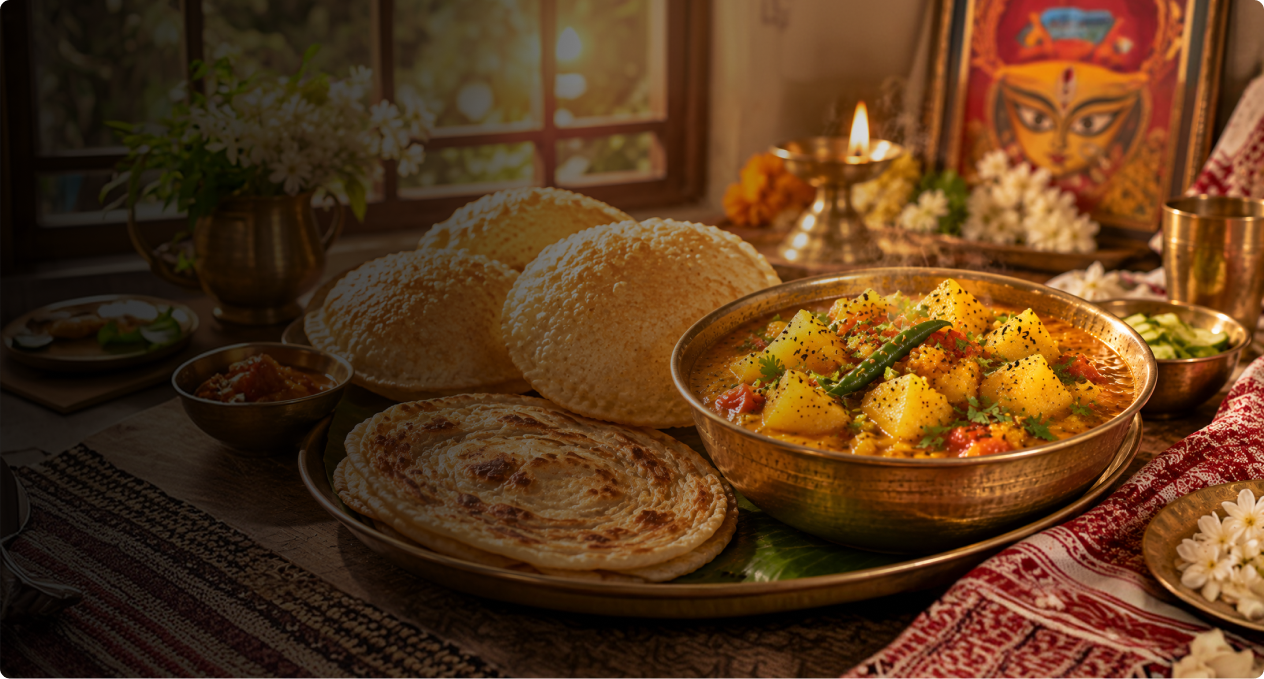
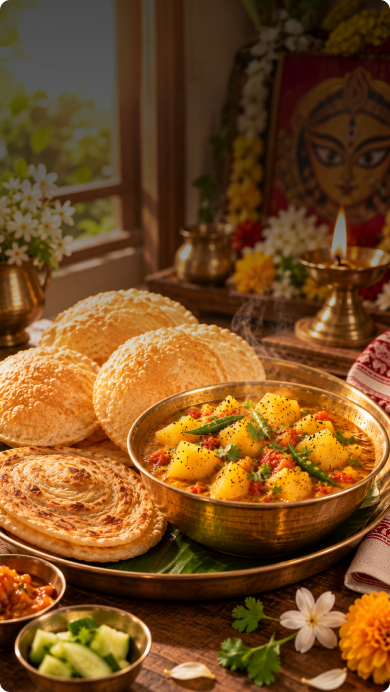
Welcome Durga Puja Mahalaya morning with a comforting bowl of Bengali aloo tarkari, potatoes simmered in a light, spiced gravy, made with King's Soyabean Oil. This classic Bengali dish is traditionally enjoyed with luchi or porota and makes a warm, festive start to Mahalaya morning.
This Bengali recipe brings together soft potato cubes in a lightly spiced, tomato-tinged gravy, tempered with whole spices and finished in soyabean oil. Cooking oil with a clean, neutral taste like soyabean oil lets the tempering spices and gentle tang of the tomato lead the flavour rather than competing with it, which is exactly what a good aloo tarkari recipe calls for. With every day pantry ingredients, this dish comes together quickly, making it ideal for a Mahalaya morning breakfast alongside luchi.
This Bengali dish recipe has a light, comforting flavour, with tender potato cubes coated in a thin, mildly spiced gravy rather than a heavy curry. Whole spices are tempered in soyabean oil until fragrant before adding the potatoes and tomato, letting the oil's mild character carry the tempering aroma without overpowering the dish.
Follow these simple steps to prepare this recipe with balanced flavor and texture.
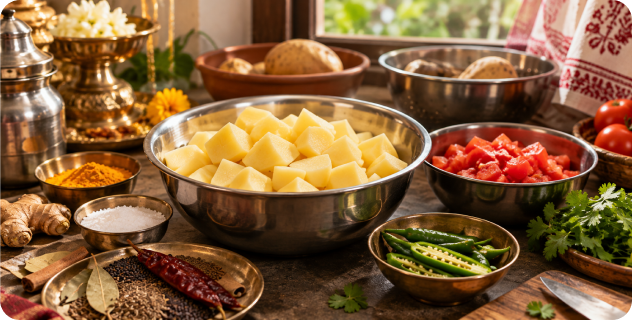
Wash and peel the potatoes, then cut them into medium cubes.
Chop the tomato and slit the green chillies.
Keep the cut vegetables aside while heating the oil.
This preparation ensures the potatoes cook evenly once they hit the pan.
A simple, well-organised prep step makes the rest of the cooking quick.
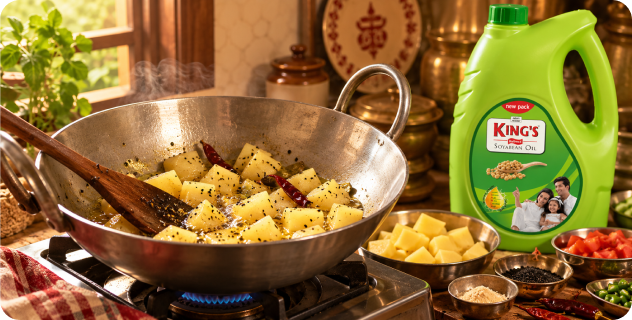
Heat soyabean oil in a kadai until warm but not smoking.
Add dried red chilli and nigella or cumin seeds, letting them sizzle and release their aroma.
Add a pinch of hing (asafoetida) and stir briefly.
Add the potato cubes and a pinch of salt, frying gently on low heat for a few minutes without browning.
This gentle tempering step is the base flavour of an authentic Bengali aloo tarkari.
Add the chopped tomato and green chillies to the pan, cooking until the tomato softens.
Stir in turmeric powder and let the spices coat the potatoes evenly.
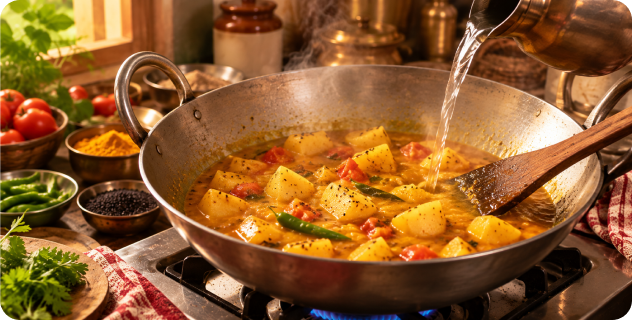
Add hot water to just cover the potatoes, then cover and simmer on low heat.
Cook until the potatoes turn soft and the gravy thickens slightly, stirring occasionally.
Adjust the salt and add a touch of sugar to balance the tomato's tang.
Turn off the heat once the potatoes are fully cooked and the gravy has reduced to a light consistency.
Let the tarkari rest for a few minutes before serving.
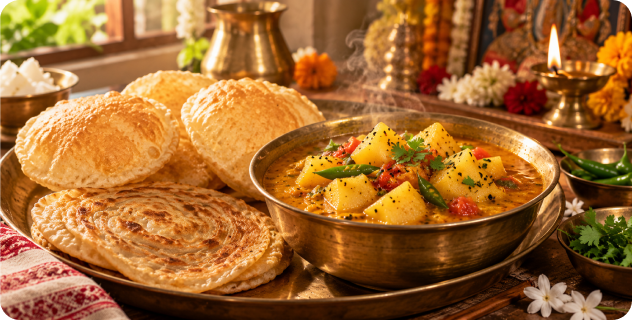
Serve hot with luchi, porota, or plain rice.
Enjoy this comforting Bengali recipe as a Mahalaya morning breakfast or a light family meal.
A simple dish like this captures the quiet, festive spirit of Durga Puja Mahalaya mornings.
Choosing the right cooking oil matters for a dish this simple, since there's very little else to mask the flavour. Soyabean oil works well for aloo tarkari because it has a mild, neutral taste that lets the tempering spices and tomato come through clearly, without adding any competing flavour of its own.
While traditional versions of aloo tarkari often use mustard oil for its sharp, pungent character, soyabean oil offers a lighter, more neutral alternative that still lets the dish's tempering spices shine. Compared with other edible oils, soyabean oil's mild profile and everyday affordability make it a practical choice for a Mahalaya morning breakfast without changing the dish's comforting character.
Aloo tarkari is a lighter, thinner-gravy Bengali preparation, typically made without onion and garlic, and served traditionally with luchi on festive mornings.
Soyabean oil has a mild, neutral taste that lets the tempering spices and tomato shine through, giving the tarkari a lighter character suited to breakfast.
Yes, this recipe is traditionally made without onion and garlic, relying instead on cumin or nigella seeds and hing for flavour.
Aloo tarkari is most served with luchi or porota, making it a classic festive breakfast combination.
Yes, you can add vegetables like brinjal, pumpkin, or peas for variation, while keeping the same light, spiced gravy base.