 Video
Video
 Recipes
 4 Servings


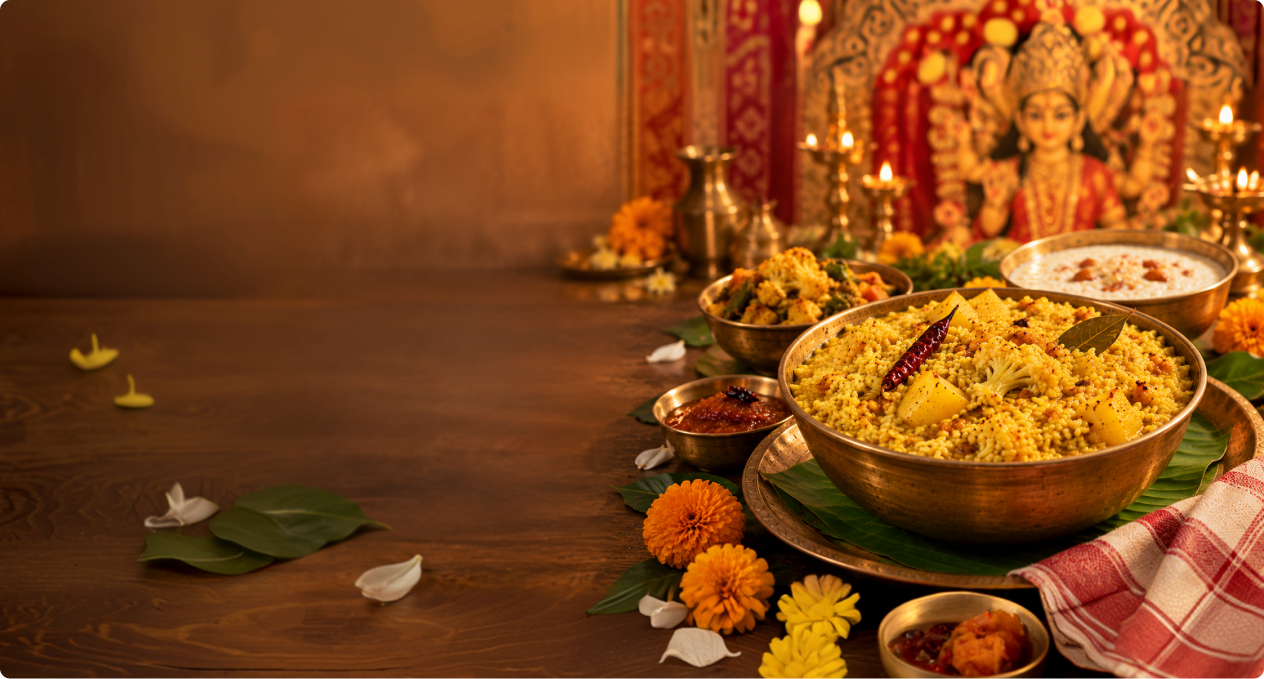
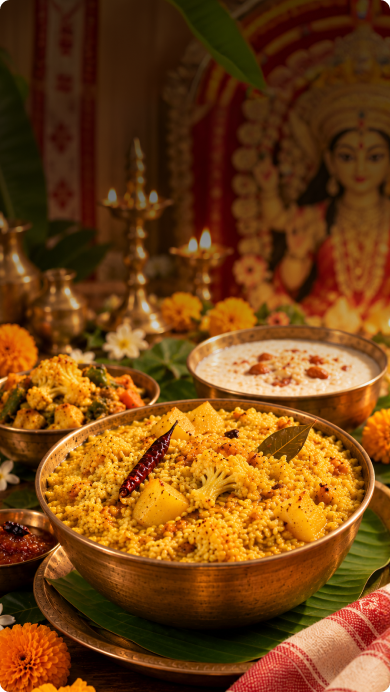
Celebrate Durga Puja with a fragrant plate of authentic Bengali khichuri, made with roasted moong dal, fragrant rice, mixed vegetables, and whole spices, finished with a rich mustard oil tadka. This comforting bhog recipe is perfect for an Ashtami offering or a wholesome family meal. It pairs beautifully with labra, chutney, and payesh.
This Bengali khichuri recipe brings together roasted moong dal and fragrant rice with a warming medley of whole spices, finished with a rich King's Mustard Oil tadka. Mustard oil for cooking gives this Bengali Khichuri its distinctive pungent depth, the flavour signature of authentic bhoger khichuri served during Durga Puja. With simple, everyday pantry ingredients, this recipe is ideal for festive bhog offerings or a comforting one-pot family meal any time of year.
Bengali-style khichdi has a warm, earthy flavour, with soft, well-cooked rice and dal balanced against golden fried vegetables. Whole spices are tempered in mustard cooking oil before adding the roasted dal and rice, letting the oil's pungent aroma infuse every spoonful as the khichuri simmers to a comforting, slightly thick consistency.
Follow these simple steps to prepare this recipe with balanced flavor and texture.
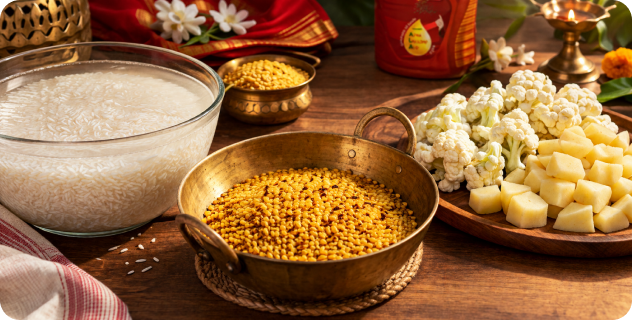
Wash the rice thoroughly and soak for 20-30 minutes, then drain well.
Dry roast the moong dal in a pan until lightly golden and fragrant, then rinse.
Cut the potatoes and cauliflower into evenly sized pieces.
Keep the prepared vegetables aside while heating the mustard oil.
This preparation helps the rice, dal, and vegetables cook evenly together.
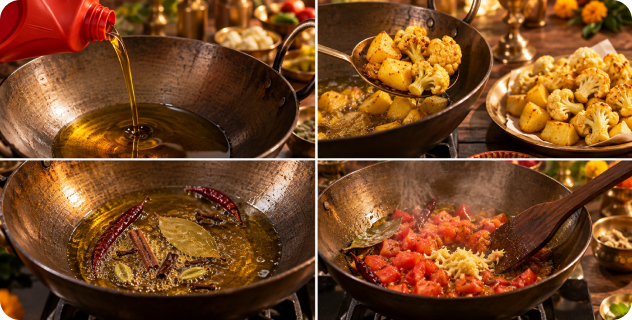
Heat Kachi Ghani Mustard Oil in a heavy-bottomed kadhai until it just starts to smoke.
Fry the potatoes and cauliflower with a pinch of salt and turmeric until golden brown; set aside.
In the same oil, temper bay leaves, dried red chillies, and whole garam masala.
Add ginger and chopped tomato, cooking briefly until fragrant.
This mustard oil tadka is what gives the khichuri its distinctive Bengali flavour.
Add the roasted moong dal and soaked rice to the tempered spices.
Add the required water, along with turmeric and salt to taste.
Bring the mixture to a gentle boil.
Cover and simmer on low heat, folding the fried vegetables back in until the rice and dal turn soft.
Avoid stirring too frequently to keep the khichuri's texture right.
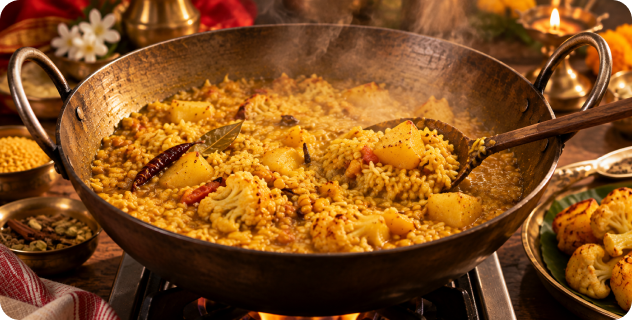
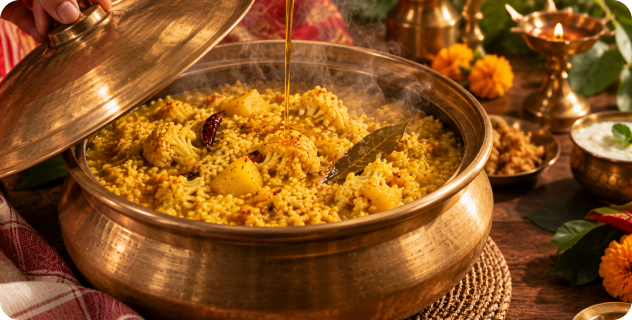
Turn off the heat once the khichuri reaches a soft, slightly thick consistency.
Drizzle a little extra mustard oil or ghee on top for added richness.
Keep the pot covered for a few minutes to let the khichuri rest.
Serve the hot Bengali Khichuri as Durga Puja bhog alongside labra, chutney, and payesh.
Enjoy this comforting Bengali recipe with family or as a festive prasad offering.
Choosing the right mustard oil can make or break a bhoger khichuri recipe. The best mustard oil for this dish has a strong, distinct pungency, which is why cold-pressed Kachi Ghani Mustard Oil gives the tadka the sharp, characteristic aroma authentic Bengali cooking relies on for depth.
While other edible oils can work for a lighter, milder khichuri, mustard cooking oil remains the traditional and preferred choice for Durga Puja bhog preparations. Its bold, distinctive flavour is central to Bengali recipe traditions, setting authentic bhoger khichuri apart from a plain, neutral-tasting khichdi made with any generic cooking oil.
Bhoger khichuri is a festive version of khichdi made without onion and garlic, using roasted moong dal, rice, and vegetables, finished with a distinct mustard oil tadka for Puja offerings.
Mustard oil gives the khichuri its authentic pungent aroma and depth of flavour, which is a defining characteristic of traditional Bengali bhog cooking.
Yes, you can skip the vegetables and prepare a simple dal-rice khichuri, still using the same mustard oil tempering for authentic flavour.
A common ratio is roughly equal parts rice and moong dal, though you can adjust slightly based on how thick or soft you prefer the khichuri.
Khichuri tastes best fresh, but you can prep the rice, dal, and vegetables a day ahead and cook it fresh on the day of the offering.