MUFA, PUFA and SFA in Everyday Cooking Oils: A Simple Guide
Summary
Turn over a bottle of cooking oil, and you will often see three abbreviations: SFA, MUFA and PUFA. They describe the types of fat in the oil, and they tell you far more about how an oil behaves in your body and your kitchen than the brand name or the colour does. For Indian households that cook with oil every day, understanding these three terms makes label reading much easier. In this guide, you'll learn what each type of fat means, how the mix differs across everyday oils such as Sunflower Oil, rice bran oil, ...
Turn over a bottle of cooking oil, and you will often see three abbreviations: SFA, MUFA and PUFA. They describe the types of fat in the oil, and they tell you far more about how an oil behaves in your body and your kitchen than the brand name or the colour does. For Indian households that cook with oil every day, understanding these three terms makes label reading much easier. In this guide, you'll learn what each type of fat means, how the mix differs across everyday oils such as Sunflower Oil, rice bran oil, Mustard Oil and soyabean oil, and how to choose the best cooking oil for your family. You will also see how King's Rice Bran Oil fits into a balanced cooking routine.
What Are SFA, MUFA and PUFA in Cooking Oil?
SFA stands for saturated fatty acids, MUFA for monounsaturated fatty acids, and PUFA for polyunsaturated fatty acids. Every cooking oil is a blend of all three in different proportions. Broadly, nutrition guidance favours oils that are lower in saturated fat. PUFA includes the essential omega-6 and omega-3 fats, which the body cannot make on its own, so they need to come from food.
Why the Fat Mix Matters When Choosing an Edible Oil
All oils are pure fat and provide a little over 120 calories per tablespoon. This means the fat mix, not the calorie count, is what separates one edible oil from another, and the SFA, MUFA and PUFA split is the most useful detail on the label. Oils higher in PUFA tend to be less stable at high heat, so the way you cook should influence which cooking oil you reach for. A quick tadka needs very different handling from a long session of deep frying.
Sunflower Oil and Rice Bran Oil: Fat Profiles Compared
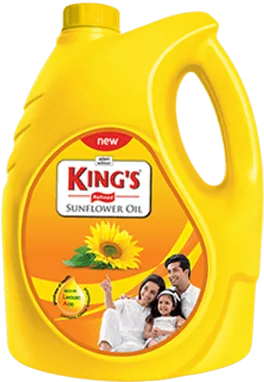
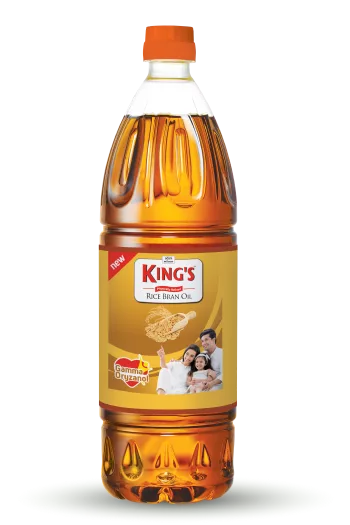
Standard Sunflower Oil is low in saturated fat, at roughly 11 per cent. Polyunsaturated fat makes up around two-thirds of the oil, and monounsaturated fat about a fifth. It is rich in omega-6 and has no meaningful omega-3. Rice bran oil is more balanced, with roughly 21 per cent SFA, about 42 per cent MUFA and around 37 per cent PUFA. Its MUFA share is higher than that of sunflower and soyabean oil, though mustard oil is higher still.
Mustard Oil and Soyabean Oil: Fat Profiles Compared
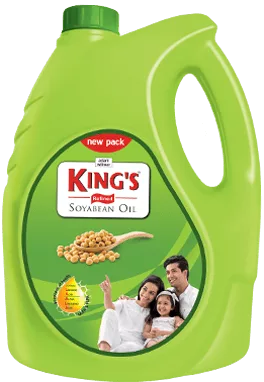
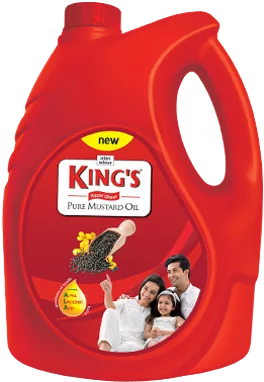
Mustard Oil has about 12 per cent SFA, around 60 per cent MUFA and roughly 21 per cent PUFA, including a useful amount of plant omega-3. It is also high in erucic acid, which some countries restrict for cooking, so check current guidance where you live. Soyabean oil contains about 16 per cent SFA, around 23 per cent MUFA and roughly 61 per cent PUFA. It provides more plant omega-3 than sunflower or rice bran oil, alongside a higher omega-6 share.
Fat Profiles at a Glance
Here's a quick figure of fat profiles:
| Oil | SFA | MUFA | PUFA |
|---|---|---|---|
| Sunflower Oil (standard) | About 11% | About 20% | About 66% |
| Rice bran oil | About 21% | About 42% | About 37% |
| Mustard Oil | About 12% | About 60% | About 21% |
| Soyabean oil | About 16% | About 23% | About 61% |
These figures are approximate and vary slightly between sources and brands.
Choosing the Best Cooking Oil for Your Family
There is no single best cooking oil for everyone. A good cooking oil is one whose fat mix suits your household, is processed in a way you are comfortable with, and fits how you cook, whether that means frying, sautéing, or tempering. Many households use two or three oils and rotate them, which spreads out the types of fat in the diet. For example, you might use mustard oil for pickles and fish curries, and rice bran oil or Sunflower Oil for everyday sabzi and rotis, as many Gujarati and South Indian kitchens do.
Quick Tips
- Compare labels: Compare labels for saturated fat before you buy.
- Measure oil: Use a spoon to measure oil instead of pouring freely.
- Choose the right oil: Pick the oil that suits the dish, such as mustard oil for pickles and a neutral oil for daily cooking.
- Store it properly: Store oil away from heat and light with the cap closed tightly.
- Avoid repeated reuse: Avoid reusing frying oil again and again.
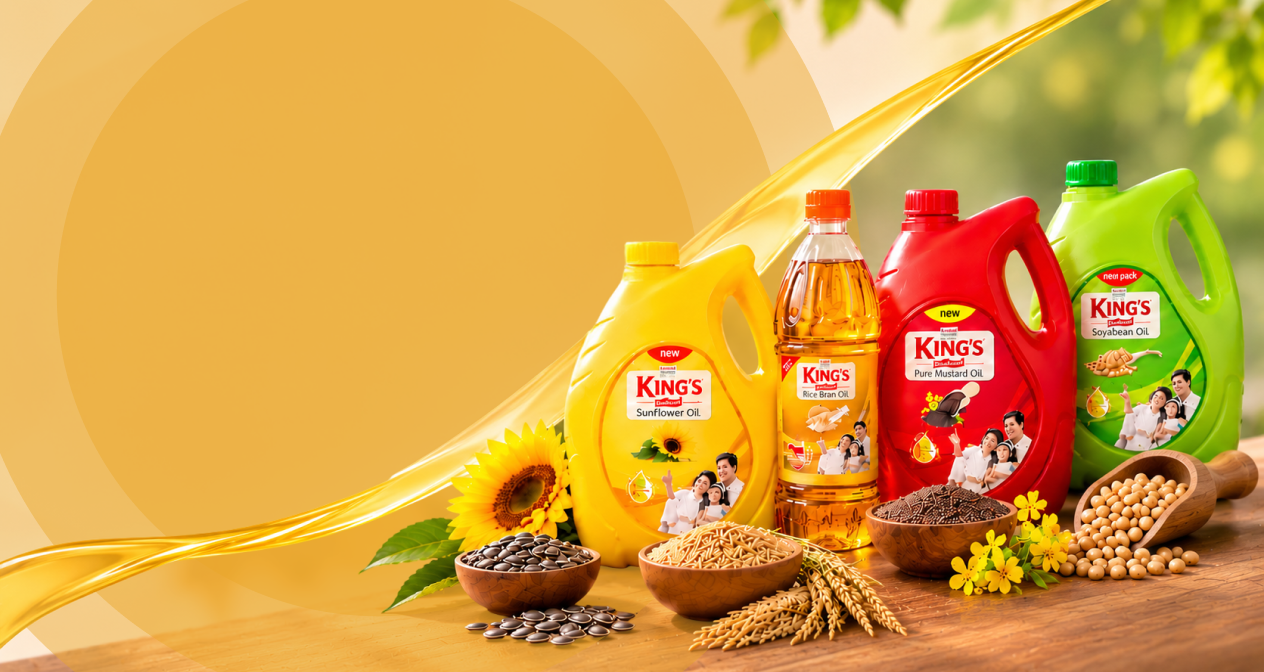
SFA, MUFA and PUFA are simple labels that explain why one oil differs from another. Sunflower oil is low in saturated fat, rice bran oil offers a balanced split, mustard oil is rich in monounsaturated fat, and soyabean oil provides more plant omega-3. When choosing the best cooking oil, compare labels, match the oil to your dish and keep sensible portions. King's Edible Oils is a trusted everyday cooking companion, with King's Rice Bran Oil, Sunflower Oil, Soybean Oil and Kachi Ghani Mustard Oil suited to the way Indian families cook.
Frequently Asked Questions
What do SFA, MUFA and PUFA mean on a cooking oil label?
SFA stands for saturated fatty acids, MUFA for monounsaturated fatty acids and PUFA for polyunsaturated fatty acids. Together, they show the types of fat in the oil. Nutrition guidance generally favours oils lower in saturated fat, and PUFA includes essential omega-6 and omega-3 fats.
Which edible oil has the lowest saturated fat?
Among the oils compared here, standard Sunflower Oil is lowest at roughly 11 per cent, with Mustard Oil close behind at about 12 per cent. Soyabean oil has about 16 per cent and rice bran oil about 21 per cent. Figures vary by brand, so check the label.
Should I use one cooking oil or rotate between several?
Using two or three oils is a practical approach. Each has a different fat mix and flavour so that you can match the oil to the dish. Rotating oils also spreads out the types of fat in your diet, and it lets you keep strong-flavoured oils for the recipes that need them.
Which cooking oil has the most MUFA?
Among the oils compared here,Mustard Oil has the highest share of monounsaturated fat at around 60 per cent. Rice bran oil follows at about 42 per cent. Soyabean oil and Sunflower Oil have lower shares, at roughly 23 and 20 per cent.
Which oil gives more plant omega-3?
Soyabean oilprovides more plant omega-3 than sunflower or rice bran oil, at about 0.9 grams per tablespoon.Mustard Oil also contains a useful amount of plant omega-3, at about 6 per cent of the oil. Sunflower Oilhas no meaningful omega-3.
Does the type of fat change how an oil behaves when cooking?
Yes. Oils higher in PUFA tend to be less stable at high heat, so they need more care during long frying. Avoid overheating any cooking oil until it smokes heavily, and do not reuse frying oil repeatedly. Choose the oil that suits your cooking method.