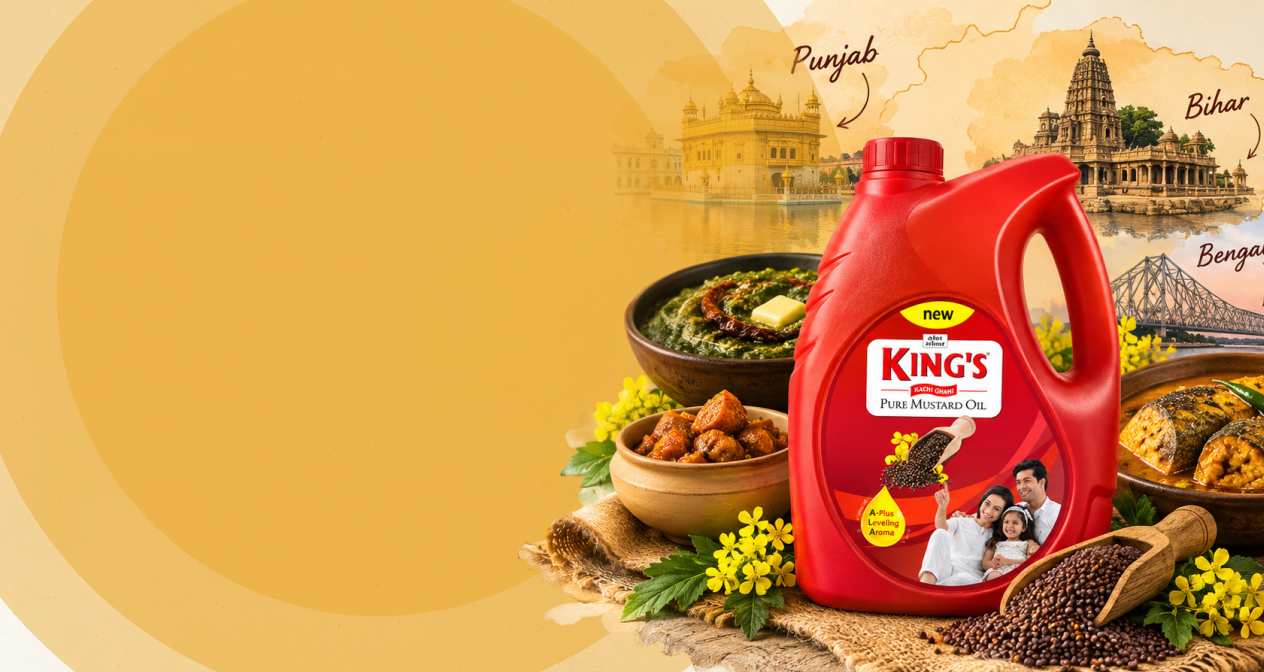
From Bengal to Bihar: How Indians Use Sarso Ka Tel for Cooking
Summary
Explore how sarso ka tel is used in Bengali, Bihari, Punjabi and other Indian kitchens, along with tips for choosing and cooking with sarso oil.
Travel from a Bengali kitchen in Kolkata to a Bihari household in Patna, and you will likely find the same bottle on both counters: sarso ka tel. Few cooking oils cross as many regional cuisines as mustard oil, showing up in fish curries in the east, saag and pickles in the north, and everyday tempering in the states in between.
Understanding why this one oil holds such a wide place in Indian kitchens says something about how regional cooking traditions overlap, even when the dishes themselves look nothing alike.
This article looks at how sarso ka tel is actually used as it moves from Bengal to Bihar and beyond, what makes it such a common edible oil across such a wide stretch of the country, and how King's Kachi Ghani Mustard Oil fits into these traditional cooking styles.
Sarso Ka Tel in Bengali Cooking: Fish, Curries, and Festive Dishes
In Bengal, sarso ka tel isn't an occasional ingredient. It forms the base of everyday cooking, going into fish curries, vegetable preparations, and the festive dishes made during pujas and family celebrations.
Bengali cooks typically heat mustard oil until it just begins to smoke, then add spices. This step mellows the oil's raw sharpness while keeping the distinctive aroma that gives Bengali food its recognisable character.
The pungency of sarso ka tel works particularly well with fish, cutting through richness in dishes like shorshe ilish and macher jhol. In this context, mustard oil's benefits go beyond taste, since many Bengali households also use it for everyday tasks outside cooking.
Sarso Ka Tel in Bihar, Punjab, and Northern India
Move north and west, and sarso ka tel takes on a different role depending on where you are:
- Bihar and Uttar Pradesh: a staple for pickles, gravies, and daily tempering of dals and vegetables.
- Punjab: closely tied to sarson da saag, where mustard greens are cooked in the oil and finished with a generous drizzle on top.
- Rajasthan and parts of central India: commonly used in pickling, where its natural preservative quality helps pickles keep through the year.
Across these regions, mustard cooking oil is also valued for its high smoke point, generally cited around 250°C, which suits both deep frying and the kind of high-heat cooking common in northern Indian kitchens.
Kachi Ghani Mustard Oil: Why the Extraction Method Matters
Not all sarso ka tel is made the same way. Kachi Ghani Mustard Oil refers to oil cold-pressed at low temperatures without chemical solvents. This traditional method retains more of the oil's natural flavour, colour, and nutritional compounds than solvent-extracted, heavily refined versions.
|
Extraction Method |
Kachi Ghani (Cold-Pressed) |
Solvent-Extracted Refined |
|
Process |
Low-temperature pressing, no chemicals |
Heat and solvent-based extraction |
|
Flavour |
Strong, pungent, authentic |
Milder, less distinctive |
|
Colour |
Deep amber |
Lighter, more processed look |
|
Traditional use |
Preferred for pickles, tempering, saag |
Used more for general cooking |
Households across Bengal, Bihar, and Punjab that care about authentic taste often look for Kachi Ghani Mustard Oil over more processed alternatives, since cold-pressing is widely credited with preserving the pungency that makes mustard oil for cooking taste distinctly different from a flat, over-refined bottle.
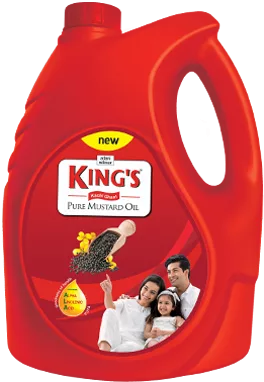
King's Kachi Ghani Mustard Oil follows this traditional cold-pressed method, aiming to keep the authentic taste and aroma that these regional cooking styles depend on.
Choosing the Best Mustard Oil for Your Kitchen
With so many options on shelves, picking among the best mustard oil brands comes down to a few practical checks:
- Look at the extraction method mentioned on the label; cold-pressed or Kachi Ghani generally indicates less-processed oil.
- Check for FSSAI certification and a clear manufacturing date.
- Smell before you buy where possible; genuine mustard oil carries a sharp, distinct aroma, not a flat or overly refined smell.
- Compare mustard oil price across a few trusted brands rather than deciding on cost alone.
Mustard oil price does vary noticeably between cold-pressed and refined varieties, and while cost matters to most households, comparing sarso ka tel purely against other cooking oil options on price can miss the point. Its real value across Bengal, Bihar, and beyond has always been about flavour and tradition, not just being the cheapest bottle on the shelf.
Quick Tips for Cooking with Sarso Ka Tel
- Heat mustard oil to a light smoke before adding spices to mellow its raw sharpness.
- Use Kachi Ghani mustard oil for pickles, saag, and dishes where its flavour should stand out.
- Store the oil in a cool, dark place to protect its natural aroma.
- Avoid buying loose or unbranded mustard oil, since purity is harder to verify.
Conclusion
From the fish curries of Bengal to the saag of Punjab and the pickles of Bihar, sarso ka tel has earned its place across Indian kitchens through flavour, tradition, and practicality, not marketing. Choosing a good bottle mostly comes down to checking the extraction method and buying from a trusted source.
King's Kachi Ghani Mustard Oil is made to support these traditional cooking styles, giving households a reliable, authentic option for the recipes that call for that distinct mustard oil character.
Frequently Asked Questions
Why is sarso ka tel used so widely across different Indian states?
Sarso ka tel works well across regions because of its high smoke point, natural preservative properties, and strong flavour that suits both cooking and pickling. From Bengali fish curries to Bihari tempering and Punjabi saag, the oil adapts to different cooking styles while keeping its distinct character.
What is the difference between Kachi Ghani Mustard Oil and refined mustard oil?
Kachi Ghani Mustard Oil is cold-pressed at low temperatures without chemical solvents, which helps retain its natural flavour, colour, and pungency. Refined mustard oil undergoes additional processing that reduces sharpness and extends shelf life but results in a milder taste than the traditional cold-pressed version.
What are the main mustard oil benefits beyond cooking?
Mustard oil is commonly used in Indian households for hair and skin care routines, alongside its long history in cooking and food preservation. In Ayurvedic tradition, it has also been associated with digestive comfort. However, this reflects traditional use rather than a medically proven claim.
Is mustard oil for cooking suitable for deep frying?
Yes, mustard oil generally has a high smoke point of around 250°C, which makes it suitable for deep frying and other high-heat cooking. It is commonly used this way across northern and eastern Indian kitchens, particularly for pickling oil bases and fried snacks.
Does mustard oil need to be heated before it is used in cooking?
Traditionally, yes. Many Indian cooks heat mustard oil until it just begins to smoke before adding spices or ingredients. This step softens the oil's raw pungency while preserving its characteristic aroma, which many regional dishes consider essential to authentic flavour.
How should mustard oil be stored to keep its quality?
Store mustard oil in a cool, dry place away from direct sunlight, ideally in its original sealed packaging or an airtight container. Keeping it away from heat sources, like the stove, helps preserve its natural aroma. It prevents the oil from turning rancid too quickly.