
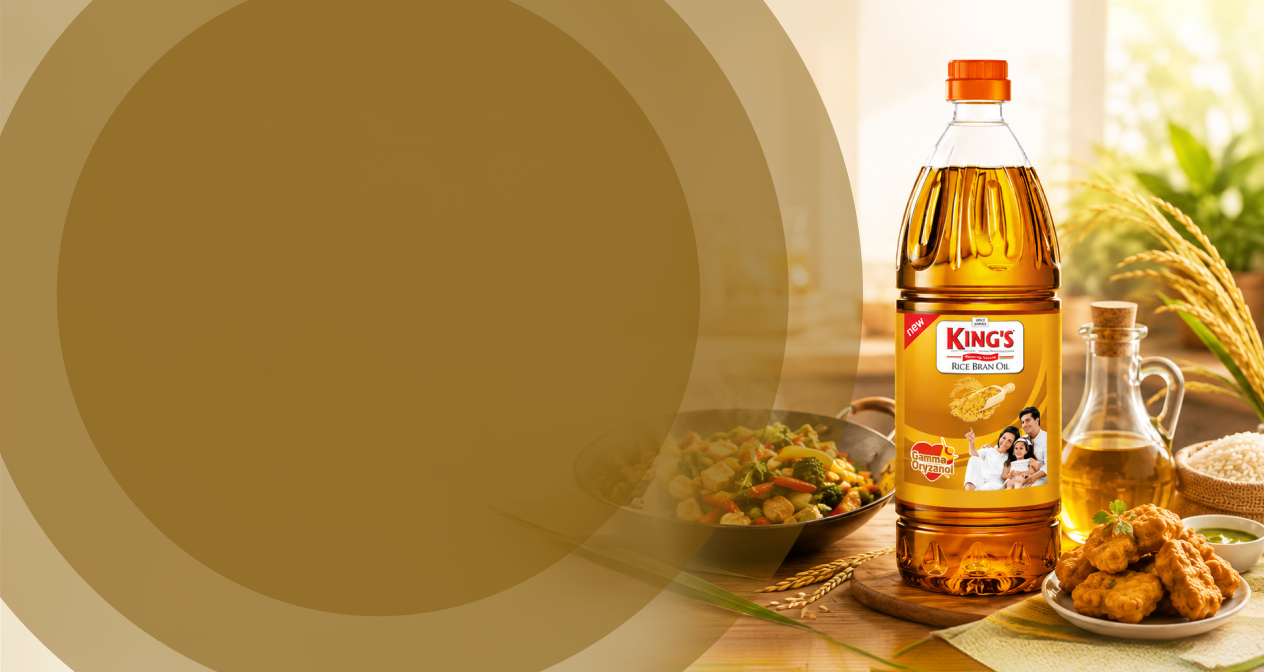
Rice Bran Oil Benefits: What Nutritionists Say
Summary
Thinking about switching to rice bran oil? Learn about its nutrition, health benefits, cooking uses and why it can be a good choice for everyday meals.
Ask a nutritionist which cooking oil they would actually keep in their own kitchen, and rice bran oil comes up more often than people expect. It is not a passing trend; a growing body of research links it to cholesterol management, antioxidant support, and heart health.
This guide breaks down rice bran oil benefits, walks through its nutrition profile, and looks at why it is increasingly recommended for everyday cooking, from simple stir-fries to deep frying.
You'll learn what makes rice bran oil nutritionally different, what research generally says about its health associations, and how to use it confidently across different cooking methods, including how King's Rice Bran Oil fits into a balanced everyday routine.
What Makes Up Rice Bran Oil Nutrition
Rice bran oil nutrition is built around a favourable fatty acid mix, along with a steady dose of vitamin E in every tablespoon.
|
Component |
Approximate Share |
|
Monounsaturated fat |
Around 47% |
|
Polyunsaturated fat |
Around 33% |
|
Saturated fat |
Around 20% |
|
Vitamin E |
Present in every tablespoon |
What sets rice bran oil apart from most other cooking oils is gamma-oryzanol, a natural antioxidant compound found almost exclusively in it, alongside tocotrienols, phytosterols, and squalene.
Rice Bran Oil Benefits for Health: What the Research Shows
Is rice bran oil healthy? Available research generally points in that direction. Key points nutritionists highlight include:
-
Gamma-oryzanol may be linked to reduced cholesterol absorption in the gut.
-
Phytosterols can help limit how much dietary cholesterol the body absorbs.
-
Health organisations often list rice bran oil among heart-conscious cooking oil options.
-
Its antioxidant compounds may help protect cells from everyday oxidative stress.
These findings are why nutritionists often mention rice bran oil as a healthy option alongside other choices.
Rice Bran Oil for Cooking: Everyday Uses
Rice bran oil for cooking is already common across many Asian kitchens, and for good reason. Its mild, nutty flavour works well in stir-fries, sautéed vegetables, and marinades without overpowering other ingredients.
Because of its high smoke point, generally cited between 232 and 254 degrees Celsius, it holds up well under deep frying and other high-heat cooking. Some studies suggest food fried in rice bran oil can absorb noticeably less oil compared with certain other cooking oils.
Quick Takeaways
- Mild, nutty flavour suited to Indian and Asian dishes
- High smoke point makes it reliable for deep frying
- May result in comparatively lower oil absorption during frying
- Works well in tempering and everyday sautéing
Is Rice Bran Oil the Best Cooking Oil for Your Kitchen?
Whether rice bran oil is the best cooking oil for a household depends on individual needs, but it checks several boxes nutritionists look for: a favourable fat profile, a high smoke point, and a strong antioxidant load.
For those searching for the best oil for cooking Indian food, rice bran oil's neutral taste and heat stability make it a best fit, from tempering spices to deep-frying snacks. King's Rice Bran Oil brings this everyday balance to Indian kitchens, supporting both traditional recipes and modern cooking styles as a healthy oil for daily cooking.
Conclusion
Rice bran oil brings together a favourable fat profile, a distinct antioxidant advantage, and genuine cooking versatility. It is not a miracle oil, but its nutrition profile explains why nutritionists keep recommending it for everyday use.
Whether you are stir-frying vegetables or deep-frying snacks for guests, rice bran oil is a dependable choice. King's Rice Bran Oil offers Indian households a consistent, everyday option that fits naturally into both traditional and modern cooking routines.
Frequently Asked Questions
What are the main rice bran oil benefits for health compared to other cooking oils?
Rice bran oil contains gamma-oryzanol, an antioxidant compound rarely found in other cooking oils, along with a favourable ratio of unsaturated to saturated fat. These features are commonly associated with cholesterol management and antioxidant support, making it a notable option among everyday cooking oils, though results can vary based on overall diet.
What are the everyday rice bran oil uses beyond frying?
Beyond frying, rice bran oil for cooking works well in stir-fries, sautéed vegetables, salad dressings, and marinades because of its mild, nutty flavour. Its light texture also makes it suitable for baking, where a neutral-tasting oil is preferred so it does not overpower the final dish.
Is rice bran oil considered a healthy cooking oil by nutritionists?
Many nutritionists consider rice bran oil a healthy cooking oil choice because of its balanced fatty acid profile and antioxidant content, including gamma-oryzanol. It is also often listed among heart-conscious oil options, though it works best as part of an overall balanced diet rather than in isolation.
What is the smoke point of rice bran oil, and is it suitable for deep frying?
Rice bran oil has a high smoke point, generally cited between 232 and 254 degrees Celsius, which makes it well suited for deep frying and other high-heat cooking methods. It tends to stay stable under sustained heat, and some research suggests food fried in it may absorb comparatively less oil.




Frequently Asked Questions
Rice bran oil contains gamma-oryzanol, an antioxidant compound rarely found in other cooking oils, along with a favourable ratio of unsaturated to saturated fat. These features are commonly associated with cholesterol management and antioxidant support, making it a notable option among everyday cooking oils, though results can vary based on overall diet.
Beyond frying, rice bran oil for cooking works well in stir-fries, sautéed vegetables, salad dressings, and marinades because of its mild, nutty flavour. Its light texture also makes it suitable for baking, where a neutral-tasting oil is preferred so it does not overpower the final dish.
Many nutritionists consider rice bran oil a healthy cooking oil choice because of its balanced fatty acid profile and antioxidant content, including gamma-oryzanol. It is also often listed among heart-conscious oil options, though it works best as part of an overall balanced diet rather than in isolation.
Rice bran oil has a high smoke point, generally cited between 232 and 254 degrees Celsius, which makes it well suited for deep frying and other high-heat cooking methods. It tends to stay stable under sustained heat, and some research suggests food fried in it may absorb comparatively less oil.


