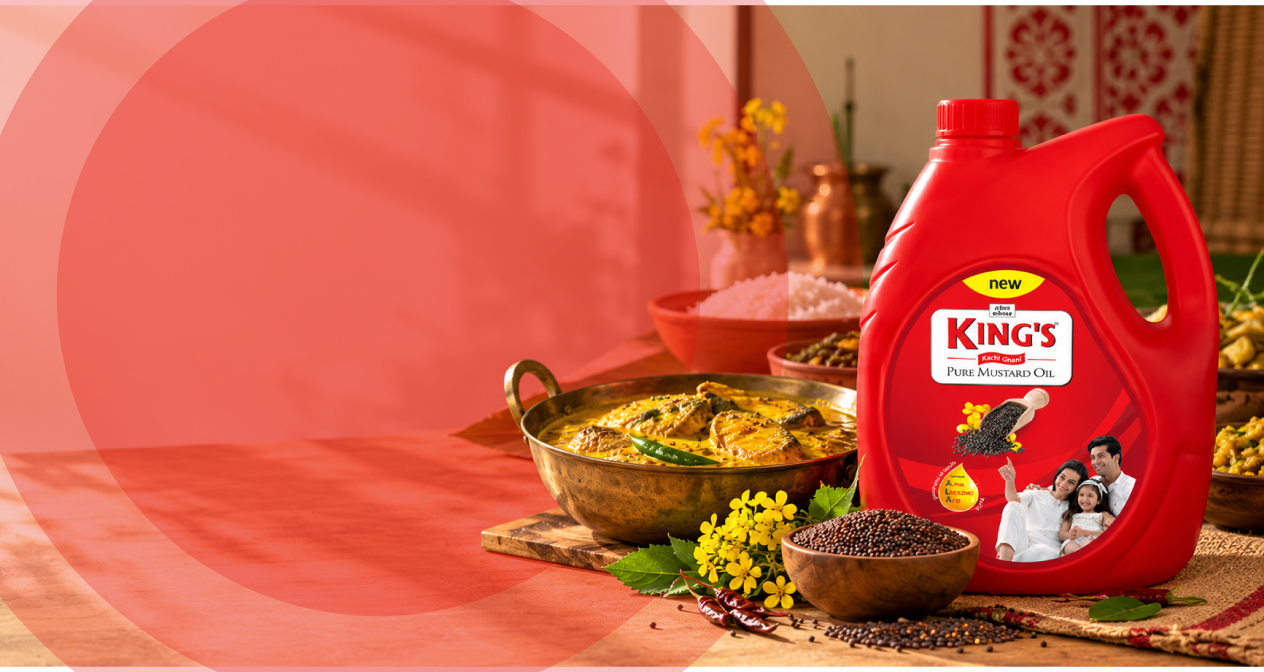
Mustard Oil: Why It Is the Heart of Authentic Bengali Cooking
Summary
Why is mustard oil central to Bengali cooking? Learn how it’s used, what Kachi Ghani means and what to check before you buy the right bottle.
Ask a Bengali home cook what makes their food taste like home, and the answer is almost always mustard oil. Its sharp, pungent aroma forms the base of everything from fish curries to simple vegetable dishes, and it's hard to imagine a Bengali kitchen without a bottle. For many Indian households, knowing why this oil matters so much helps with cooking regional recipes properly and with choosing the right bottle at the shop. The reason lies in how the oil is made and how it is used. In this guide, you'll learn why mustard oil is central to Bengali cooking, how cooks use it step by step, and how King's Kachi Ghani Mustard Oil complements traditional Indian recipes and regional cooking styles. You will also find practical tips on what to check before you buy.
Why Mustard Oil Defines the Flavour of Bengali Food
Mustard oil gives Bengali cooking a pungent character, a sharp and slightly spicy richness that a neutral edible oil cannot match. It is a staple in Bengali households and is hard to replace in classic recipes. Shorshe ilish, which is hilsa cooked in a mustard sauce, and aloo posto, which is potatoes cooked with poppy seeds, are often cited as dishes that depend on it. The same is true of labra, a mixed vegetable dish made without onion or garlic and commonly served with khichuri. In labra, the oil carries much of the flavour because there are so few other strong ingredients.
How Mustard Oil Is Used in Bengali Cooking Techniques
A signature technique in Bengali kitchens is heating the oil until it reaches its smoking point before adding other ingredients. This mellows the raw, harsh edge of the oil while keeping its characteristic aroma. Keep the heat controlled and stay near the stove while you do this, as the oil can heat quickly. A typical sequence looks like this:
- Heat the mustard cooking oil in a heavy-bottomed kadhai until it begins to smoke lightly.
- Lower the flame and let the oil cool for a few seconds.
- Add panch phoron, the five-spice mix, along with dried red chillies, and fry briefly until fragrant.
- Add vegetables, fish or other ingredients and continue cooking.
Using mustard oil this way builds the flavour base of the dish. This is why the oil is treated as an ingredient in its own right, not just a medium for frying.
Sarso Ka Tel: Names, Regions and Everyday Mustard Oil Uses
Mustard oil in Hindi is called sarso ka tel, and you will also see it written as sarson tel, depending on the region and the spelling. The name changes, but cooks across eastern and northern India rely on the same oil.
| Name | Where You May Hear It |
| Mustard oil | General and English usage |
| Sarso ka tel | Hindi-speaking regions |
| Sarson tel | Alternative spelling, common in northern India |
| Shorshe tel | Bengali |
Kachi Ghani Mustard Oil: The Traditional Choice
Kachi Ghani Mustard Oil is cold-pressed at low temperatures without chemical solvents. This traditional method helps retain the oil's natural pungency, colour and aroma, and that sharpness is exactly what Bengali recipes rely on. Households that care about authentic taste often look for Kachi Ghani Mustard Oil instead of heavily refined versions. A more processed oil tends to taste milder and flatter, and a dish made with it can taste noticeably different from the traditional version.
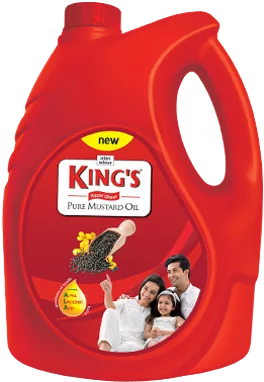
This is why King's Kachi Ghani Mustard Oil is a natural fit for fish curries, vegetable preparations, marinades and pickles.
Choosing the Best Cooking Oil: Mustard Oil Price, Benefits and What to Check
Mustard oil price varies according to pack size, brand, production method and retail outlet. Compare similar pack sizes and product types before deciding which bottle offers better value. A lower price does not necessarily indicate lower quality, just as a higher price does not automatically mean better nutrition. When choosing a good cooking oil, consider these points:
- Check the label: Confirm that the product is clearly identified as mustard oil and review its ingredients and manufacturer details.
- Consider the aroma: Mustard oil typically has a distinctive pungent smell. However, aroma alone cannot establish freshness or safety.
- Review the dates: Check the manufacturing date, best-before date and storage instructions.
- Choose for your cooking style: Kachi Ghani Mustard Oil suits recipes where its strong flavour is desired, while a neutral oil may be more suitable for dishes that need a milder taste.
From shorshe ilish to everyday vegetable dishes, mustard oil adds a distinctive flavour to traditional Bengali cooking. If you're looking to recreate these familiar tastes at home, explore King's Kachi Ghani Mustard Oil for your favourite regional recipes. Choose the right oil for your cooking style and bring the flavours of tradition to your family table.
Frequently Asked Questions
Why is mustard oil so important in Bengali cooking?
Mustard oil provides the pungent, slightly spicy flavour that defines dishes such as shorshe ilish, aloo posto and labra. In many recipes, the oil is the main source of flavour. A neutral oil cannot recreate that sharpness, which is why cooks treat mustard oil as an ingredient in its own right.
What is the difference between Kachi Ghani Mustard Oil and refined mustard oil?
Kachi Ghani Mustard Oil is cold-pressed at low temperatures without chemical solvents, so it keeps its strong aroma, colour and pungency. Refined mustard oil goes through further processing and usually tastes milder. Choose the cold-pressed type for traditional Bengali dishes and pickles, and a refined one if you prefer subtle flavour.
Why is mustard oil heated to its smoking point before cooking?
Heating the oil until it begins to smoke lightly softens its raw, harsh edge while keeping its aroma. Cooks then lower the flame and add spices or vegetables. Keep the heat under control and watch the pan closely, as the oil can heat very quickly.
What is mustard oil called in Hindi?
Mustard oil in Hindi is called sarso ka tel. You may also see it spelt sarson tel, depending on the region. In Bengali, it is known as shorshe tel. All these names refer to the same oil, pressed from mustard seeds and used widely across eastern and northern India.