How to Choose the Right Rice Bran Oil for Your Kitchen
Summary
Learn how to choose rice bran oil for everyday cooking by comparing refining methods, smoke point, quality markers, certifications, storage and uses.
Not every bottle labelled rice bran cooking oil on a supermarket shelf performs the same way in your kitchen. The extraction method, refining level, and even the packaging affect how well the oil holds up under heat, and how much of its natural goodness reaches your plate. For Indian households cooking multiple meals a day, this difference matters. Oil that breaks down quickly under heat can change the taste of your food and shorten how long a bottle lasts.
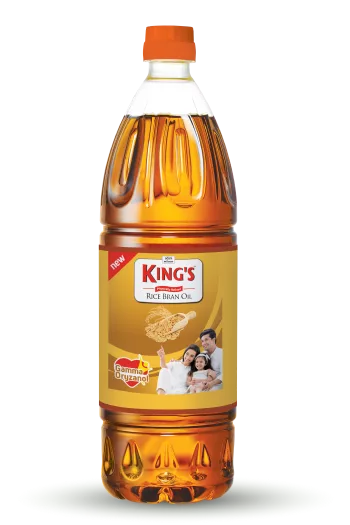
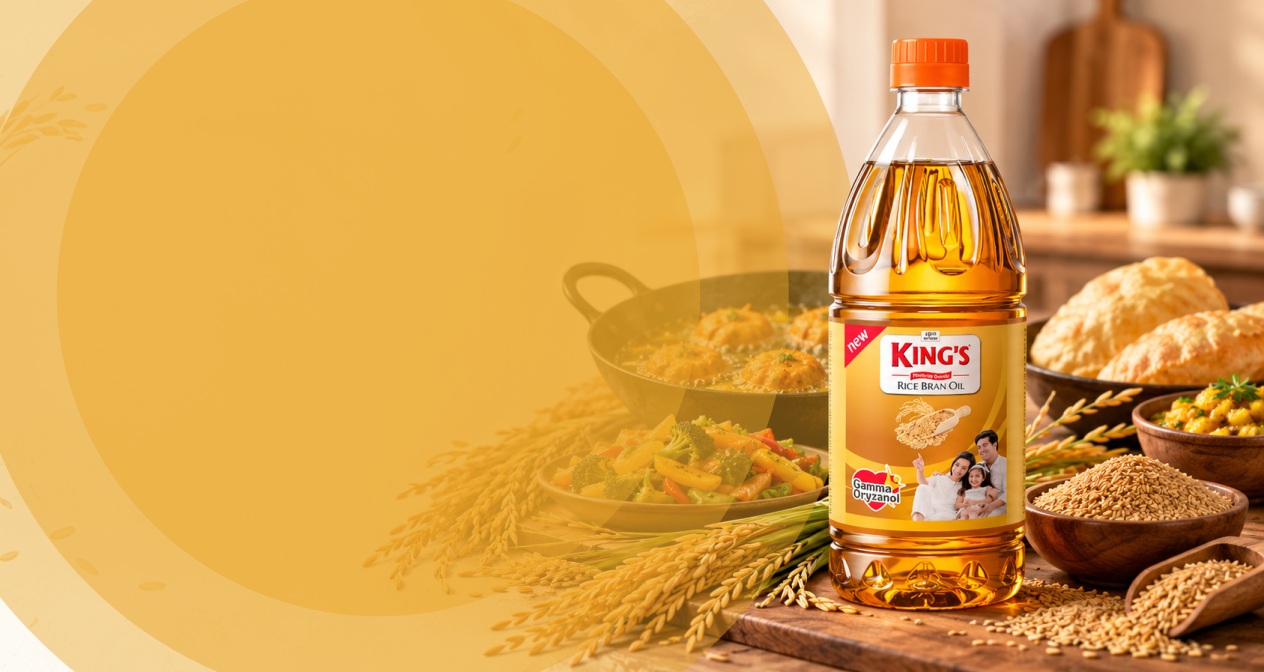
This guide walks through exactly what to check before buying rice bran cooking oil, from smoke point and refining method to certification and storage. You will also see how King's Rice Bran Oil fits into a kitchen that needs one reliable oil for frying, sautéing, and daily family meals.
Refined vs Cold-Pressed: Choosing the Right Rice Bran Refined Oil
The first decision most buyers face is the level of refining. Rice bran refined oil goes through a process that removes impurities and raises the smoke point, so it works well for everyday frying, tempering, and high-heat Indian cooking.
Cold-pressed or expeller-pressed rice bran oil sits at the other end. It keeps more of its natural flavour and nutrients, but it has a shorter shelf life and a lower smoke point, so it suits dressings and lower-heat dishes better than a deep fry.
|
Feature |
Price Impact |
Cold-Pressed Rice Bran Oil |
|
Smoke point |
Higher, roughly 232–254°C |
Lower, less suited to high heat |
|
Flavour |
Mild and neutral |
Slightly nutty, more pronounced |
|
Best for |
Frying, sautéing, tempering |
Dressings, finishing dishes |
|
Shelf life |
Longer |
Shorter |
|
Everyday practicality |
High |
Moderate |
For most Indian kitchens that fry, temper, and sauté throughout the week, refined rice bran oil is the more practical everyday pick.
Understanding Rice Bran Oil High Smoke Point and Quality Markers
A rice bran oil high smoke point, generally between 232°C and 254°C for refined varieties, is one of the clearest signs the oil can handle the frequent tempering and frying common in Indian cooking.
Smoke point alone doesn't tell the full story. A few other markers are worth checking on the label:
- Fatty acid balance: Good-quality rice bran oil typically contains around 37–38 per cent monounsaturated and polyunsaturated fat, with saturated fat under 25 per cent.
- Gamma-oryzanol content: Where mentioned on the label, higher levels generally point to a less processed, higher-quality oil.
- Colour and clarity: A light golden colour without cloudiness is usually a good sign.
- Odour: Rice bran oil should smell mild, not sharp or rancid.
Rice Bran Oil Benefits for Health: What to Look For on the Label
If whether rice bran oil is good for health influences your buying decision, start with the ingredient list. It helps you avoid bottles listing synthetic preservatives such as TBHQ or BHA.
Rice bran oil benefits for health are closely tied to its natural antioxidant content, particularly vitamin E and gamma-oryzanol.
Both compounds degrade faster when the oil sits in a clear bottle under bright light. Choosing a dark glass or opaque plastic bottle helps protect the oil's nutritional value from the shelf to your pan.
Certification, Sourcing, and Everyday Rice Bran Oil Uses
Before picking a bottle, run through a quick checklist:
- FSSAI approval mark on the packaging.
- A clearly printed manufacturing date.
- A brand or mill with a consistent, recognisable track record.
- Sealed packaging with no signs of tampering.
Once you've chosen a good bottle, rice bran oil uses go well beyond being just a healthy cooking oil for daily cooking. It works equally well for deep frying, sautéing vegetables, shallow-frying parathas, and even baking, making it a genuinely versatile choice across most Indian households.
King's Rice Bran Oil is made with this everyday versatility in mind, suited to the kind of mixed cooking — some frying, some sautéing, some tempering — that most Indian kitchens actually do through the week.
Quick Tips for Buying and Using Rice Bran Oil
- Pick refined rice bran oil for regular frying and tempering; save cold-pressed for dressings.
- Store the bottle away from direct sunlight and heat, ideally in a cool cabinet.
- Avoid reusing oil more than once or twice for deep frying.
- Check the manufacturing date before buying, not just the expiry date.
- Close the cap tightly after each use to limit air exposure.
Conclusion
Choosing the right rice bran cooking oil comes down to a few practical checks: refining method, smoke point, label transparency, and how the bottle has been stored. None of this requires expert knowledge, just a closer look before you pay at the counter.
For households that want one dependable oil for frying, sautéing, and daily family meals, King's Rice Bran Oil offers the everyday consistency Indian kitchens look for, without asking you to compromise on quality or budget.
Frequently Asked Questions
What's the difference between refined and cold-pressed rice bran oil?
Refined rice bran oil goes through processing that removes impurities and raises its smoke point, making it suitable for frying and high-heat cooking. Cold-pressed rice bran oil retains more natural flavour and nutrients but has a lower smoke point and shorter shelf life, so it works better for dressings or light sautéing.
How can I tell if a bottle of rice bran cooking oil is good quality?
Check the label for a simple 100% rice bran oil ingredient list, an FSSAI mark, and a recent manufacturing date. Good-quality oil is usually packaged in dark glass or opaque containers to protect against light, and it should have a mild colour and smell, without any sharp or rancid odour.
Is rice bran oil good for health compared to other cooking oils?
Rice bran oil contains a favourable mix of unsaturated fats along with natural antioxidants like vitamin E and gamma-oryzanol. It can be part of a balanced cooking routine, though no single oil should be treated as a complete solution. Rotating between a few good-quality oils is commonly recommended.
What are the everyday rice bran oil uses beyond frying?
Beyond deep frying, rice bran oil works well for sautéing vegetables, shallow frying parathas and cutlets, tempering dals, and even baking. Its neutral flavour means it doesn't overpower other ingredients, which is why many households use it as their primary all-purpose cooking oil.
Does rice bran oil need any special storage at home?
Store rice bran oil in a cool, dry place away from direct sunlight. Keeping the cap tightly closed after each use and avoiding placing the bottle near the stove help preserve its quality and slow the natural breakdown of its antioxidant content.
Can rice bran oil be reused after frying?
Reusing any cooking oil repeatedly is generally not recommended, since repeated heating breaks down its quality. If you do reuse rice bran oil, strain out food particles first and limit it to one additional use, ideally for lower-heat cooking rather than another round of deep frying.