What to Consider When Buying Cooking Oil for Your Family
Summary
Learn what to consider when buying cooking oil, including smoke point, refining method, nutrition, storage and the differences between common cooking oils.
Walk down the cooking oil aisle of any supermarket, and the choice can feel overwhelming. Mustard, sunflower, rice bran, soyabean — each bottle claims to be the healthiest or most versatile option for your family's everyday meals. The right answer isn't the same for every household. It depends on how you cook, what your family eats most often, and what matters to you nutritionally.
This guide breaks down the practical factors worth weighing before you pick a bottle of cooking oil, from smoke point and refining method to the specific characteristics of mustard, sunflower, rice bran, and soyabean oil, including where King's range of edible oils fits into this decision.
Smoke Point: Matching Cooking Oil to How You Actually Cook
Smoke point is the temperature at which an oil starts to break down and burn. Heating oil past this point can affect taste and quality, making it one of the most practical factors in choosing cooking oil for a family kitchen.
|
Oil Type |
Approximate Smoke Point |
Common Use |
|
Sunflower Oil (refined) |
227–232°C |
Frying, sautéing, roasting |
|
Rice Bran Oil (refined) |
232–254°C |
Frying, tempering, baking |
|
Soyabean Oil (refined) |
~230°C |
General cooking, frying |
|
Mustard Oil |
~250°C |
Tempering, pickling, saag, gravies |
For everyday frying and high-heat Indian cooking, rice bran oil and Sunflower Oil both hold up well. Mustard Oil, on the other hand, is traditionally heated to its smoke point deliberately, as part of the tempering process, before other ingredients go in.
Comparing Common Cooking Oils: Mustard, Sunflower, Rice Bran, and Soyabean
Each major cooking oil brings something different to a family's kitchen:
- Mustard Oil: especially Kachi Ghani Mustard Oil, is prized in eastern and northern Indian households for its pungent flavour and role in fish curries, pickles, and tempering.
- Sunflower Oil: offers a milder, neutral taste that suits a wider range of everyday dishes, from frying to baking.
- Rice Bran Oil: sits close to sunflower oil in flavour but has a slightly higher smoke point, making it useful for households that fry often.
- Soyabean Oil: is fairly neutral too, with good heat stability, making it a practical everyday choice for families who cook a mix of dishes through the week.
Health Considerations: Weighing Rice Bran Oil Benefits and Mustard Oil Benefits
Rice bran oil benefits include a favourable mix of monounsaturated and polyunsaturated fats along with gamma-oryzanol. This natural antioxidant may support heart health as part of a broader, balanced diet.
Mustard oil benefits centre on its comparatively lower saturated fat content. In Ayurvedic tradition, mustard oil has also been associated with digestive comfort. However, this reflects traditional use rather than a clinically established claim.
Soybean oil and Sunflower Oil both contribute vitamin E and unsaturated fats to a diet. Given these benefits across oils, the healthiest approach for most families often comes down to variety rather than relying on one oil exclusively.
Practical Buying Tips for Choosing the Best Cooking Oil
Beyond the oil type itself, a few checks apply no matter which bottle you pick:
- Look for clear labelling of the refining method (refined, cold-pressed, or Kachi Ghani).
- Check for FSSAI certification on the packaging.
- Prefer dark or opaque packaging, which protects against light-driven nutrient loss.
- Note the manufacturing date, not just the expiry date.
- Avoid loose or unbranded oil, where purity is harder to verify.
For most Indian families, keeping two oils on hand works well: a neutral, high-smoke-point option like Sunflower Oil or rice bran oil for regular frying and sautéing, and Mustard Oil for specific traditional dishes and tempering.
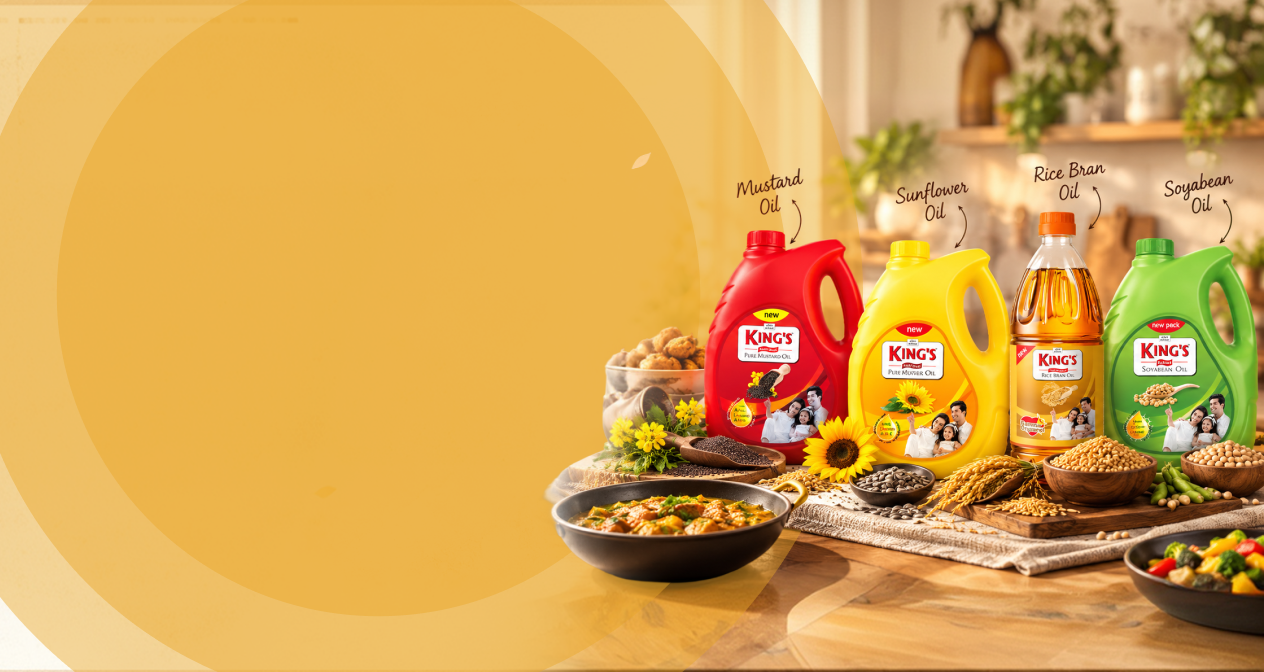
King's Edible Oils offers Soybean Oil, Sunflower Oil, Rice Bran Oil, and Kachi Ghani Mustard Oil, giving households the flexibility to match the right oil to the right dish without switching brands.
Quick Tips for Buying Cooking Oil
- Match the oil to your cooking style, not just the price tag.
- Keep at least two types of oil at home for different cooking needs.
- Always check FSSAI certification and manufacturing date before buying.
- Rotate between oils occasionally rather than using just one type exclusively.
- Store all oils away from heat and direct sunlight.
Conclusion
Choosing cooking oil for a family doesn't need to be complicated once you know what to check: smoke point, refining method, certification, and how well it matches your usual cooking style. A little label-reading goes a long way.
King's Edible Oils, with its range spanning Soybean Oil, Sunflower Oil, Rice Bran Oil, and Kachi Ghani Mustard Oil, lets families choose what suits their kitchen best, whether that means one all-purpose bottle or a couple of oils for different dishes throughout the week.
Frequently Asked Questions
What is the healthiest cooking oil to use for a family's everyday meals?
No single oil suits every family perfectly. Sunflower oil, rice bran oil, soyabean oil, and mustard oil each bring different fatty acid profiles and flavours. Many nutrition experts suggest rotating between two or more oils rather than depending on just one for all your cooking.
How do I choose between Mustard Oil, Sunflower Oil, and rice bran oil?
Base your choice on how you cook most often. Sunflower and rice bran oil suit frequent frying and sautéing due to their neutral taste and higher smoke points, while Mustard Oil works best for traditional dishes, pickles, and tempering where its distinct flavour is part of the recipe.
Does smoke point matter for health, not just cooking performance?
Yes, to an extent. Heating oil past its smoke point can break down its quality and affect the taste of food. Choosing an oil with a smoke point suited to your cooking method, frying, sautéing, or tempering, helps preserve both flavour and the oil's natural nutritional value.
Is it better to use one cooking oil or rotate between a few different types?
Rotating between two or three cooking oils is commonly recommended, since each oil offers a slightly different mix of fats and nutrients. Keeping one neutral oil for daily frying and another, like mustard oil, for specific traditional dishes covers most everyday cooking needs.
Are refined oils less healthy than cold-pressed oils?
Refined and cold-pressed oils serve different purposes, not one being strictly healthier. Refined oils have a higher smoke point and longer shelf life, making them suited to regular cooking, while cold-pressed oils retain more natural flavour and nutrients but require lower cooking temperatures.
How should a family store multiple cooking oils at home?
Store all cooking oil bottles in a cool, dry place away from direct sunlight and heat sources like the stove. Keep caps tightly closed after each use, and try to use oils within a reasonable time after opening rather than letting bottles sit for many months.