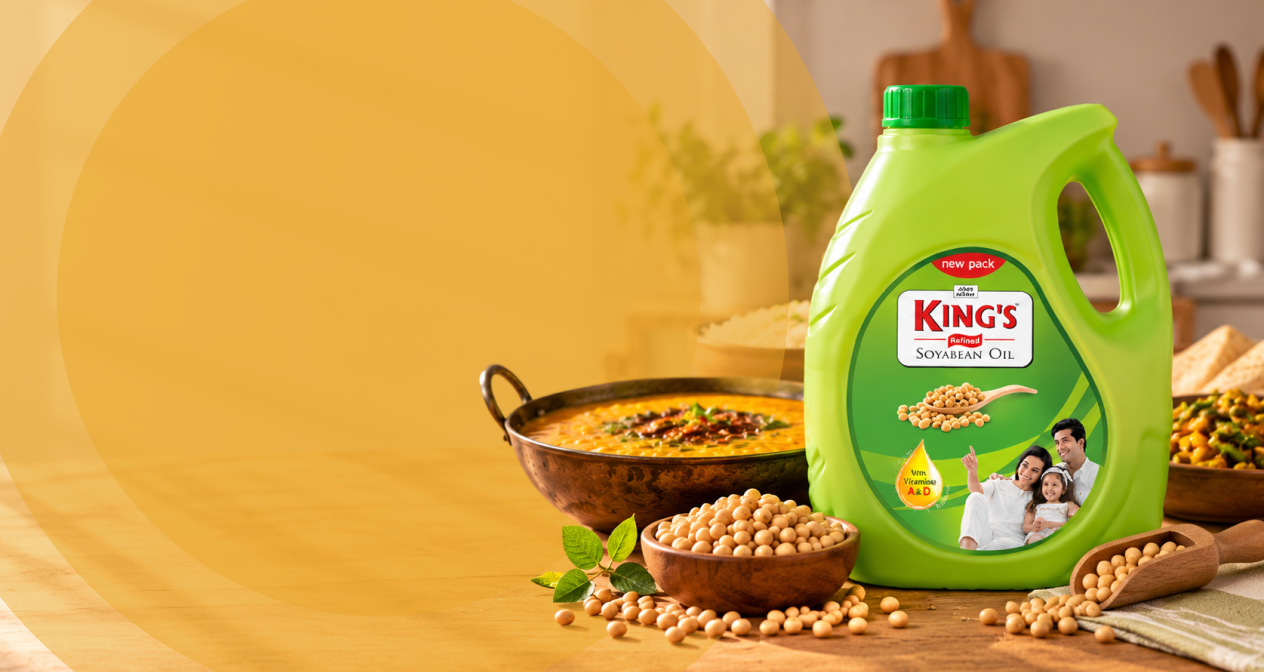
Fortified Soyabean Oil: How It Adds Essential Nutrients to Your Daily Meals
Summary
Your cooking oil can do a little more. Learn how fortified soyabean oil adds vitamins A and D to everyday dal and sabzi, and how to pick the right bottle.
Cooking oil is something almost every Indian household uses at every meal, which makes it one of the easiest ways to add nutrients to everyday food without changing what you cook. That is the idea behind fortified soyabean oil: refined oil with essential vitamins added during production, so the nutrients reach the table through the dal, sabzi and rotis your family already eats. For families who want a little more nutrition from regular meals, understanding how this works helps you read labels and choose with confidence. This guide explains what fortified soyabean oil is, which nutrients it adds, and what the oil itself contains. You will also see why many households choose King's Soyabean Oil for daily meal preparation, along with practical tips for picking a good cooking oil for your kitchen.
What Is Fortified Soyabean Oil?
Fortified soyabean oil is regular refined soyabean oil with added micronutrients, mainly vitamins A and D. In India, fortified packs of staples such as edible oil, milk and rice are meant to carry a blue +F logo, which helps shoppers spot them on the shelf. Fortification is different from the nutrients that already occur naturally in an oil. It is a deliberate addition made at the refining stage. You can check the label to see whether a bottle of edible oil has been fortified and with which vitamins.
Why Vitamins A and D Are Added to Cooking Oil
Both vitamins are fat-soluble, which means the body absorbs them along with fat. This makes cooking oil a natural carrier. Oil is also eaten daily across almost every group in India, at roughly 20 to 30 grams per person per day, so it is a practical way to reach many people with the same nutrients.
The reason this matters is that vitamin deficiencies remain common. India's food fortification resource notes that more than half of children have some degree of vitamin A deficiency, and vitamin D deficiency is also widespread among women. Fortified oil is meant to supply part of the daily requirement, not all of it. It works alongside foods such as vegetables, fruit, milk, eggs and pulses, rather than replacing them.
Soyabean Refined Oil: What the Oil Itself Contains
Fortification adds vitamins, but the nutritional profile of soyabean oil also depends on the fats naturally present in the oil. Soyabean refined oil typically contains around 16% saturated fat, 23% monounsaturated fat and 61% polyunsaturated fat. These proportions can vary with the product and processing method.
| Type of Fat | Approximate Share in Soybean Oil |
| Saturated | About 16% |
| Monounsaturated | About 23% |
| Polyunsaturated | About 61% |
Compared with sunflower or rice bran oil, soyabean oil provides more plant omega-3, at about 0.9 grams per tablespoon. Like all cooking oil, it gives a little over 120 calories per tablespoon, so portions still matter.
Its fairly neutral flavour is one reason soyabean oil is such a common everyday choice for sautéing and frying. It is also among the more affordable options, which suits households that cook every day. It works well in dal tadka, aloo gobi, Maharashtrian usal and Gujarati shaak, where the masalas should stay in front.
Choosing the Best Cooking Oil for Daily Meals
When picking the best cooking oil for your family, look for a clear label stating the type of oil and whether it is fortified. Check that the pack carries the +F logo if fortification matters to you. A good cooking oil should also show an FSSAI licence number and a recent manufacturing date.
Fortified soyabean oil is a convenient way to add vitamins A and D to meals, but it is not a substitute for a varied diet. Use sensible quantities, store the bottle away from heat and light, and treat fortification as a small extra rather than a reason to use more oil.
Conclusion
Fortified soyabean oil is a simple way to add vitamins A and D to meals your family already enjoys, since cooking oil is used in almost every Indian kitchen every day. It works best as a small addition to a varied diet, together with sensible portions and good storage.King's Edible Oils is a trusted everyday cooking companion, and King's Soyabean Oil suits the daily meals of Indian families.
Frequently Asked Questions
What is fortified soyabean oil, and which nutrients does it add?
Fortified soyabean oil is refined oil with micronutrients added during production, mainly vitamins A and D. These are added to help meet part of the daily requirement through a food people already eat every day. It supports a varied diet but does not replace one.
How can I tell whether a bottle of cooking oil is fortified?
Look for the blue +F logo on the pack and check the label for details of the added vitamins. Fortified packs of edible oil are meant to carry this mark in India. If you cannot find it, check the ingredients list or ask the shopkeeper before buying.
Does fortified soyabean oil change the taste or cooking performance?
Fortification adds vitamins in small amounts during refining, so it is not meant to change how the oil tastes or behaves. Soyabean oil has a fairly neutral flavour and suits sautéing and frying. You can use it in your usual recipes in the same way as regular refined oil.
Is soybean oil a good edible oil for everyday cooking?
Yes, soybean oil is widely used in Indian homes for daily meals. It has a neutral flavour, suits sautéing and frying, and is among the more affordable options. It also provides plant omega-3. Like any oil, it is best used in sensible quantities as part of a balanced diet.