Cooking with Sunflower Oil: Tips for Everyday Meals
Summary
Learn practical tips for cooking with sunflower oil, including frying, sautéing, baking, storage and choosing the right type of oil for everyday meals.
Sunflower oil is one of those kitchen staples that quietly does its job without asking for attention, until something goes wrong. A burnt smell while frying, oil that turns cloudy too fast, or food that tastes slightly off usually traces back to how the oil is being used, not the oil itself. Get a few basics right — refined versus unrefined, matching smoke point to the dish, and sensible storage — and sunflower oil becomes one of the most dependable oils in a daily kitchen.
This guide walks through practical tips for cooking with sunflower oil across everyday meals, from frying and sautéing to dressings, so you get consistent results in the kitchen. You will also see where King's Sunflower Oil fits into this everyday routine.
Understanding Sunflower Oil Before You Cook With It
Not all sunflower oil behaves the same way in a pan. Sunflower refined oil is processed to remove impurities and raise its smoke point, generally landing between 227°C and 232°C, which makes it suited to sautéing, roasting, and frying.
|
Type |
Smoke Point |
Flavour |
Best Use |
|
Refined sunflower oil |
~227–232°C |
Neutral |
Frying, sautéing, roasting |
|
Unrefined/cold-pressed |
~107°C |
Stronger, nuttier |
Dressings, light finishing |
|
High-oleic sunflower oil |
Slightly higher than standard refined |
Neutral |
Repeated frying, high-heat use |
Knowing which bottle sits in your kitchen matters more than most people realise. Using an unrefined oil at frying temperatures wastes both its flavour and much of its nutritional value.
Best Oil for Frying and High-Heat Cooking
For everyday frying, sunflower oil for cooking works well precisely because refined varieties hold up at high temperatures without breaking down or smoking prematurely.
This makes it a practical best oil for frying pakoras, cutlets, and other fried snacks common across Indian households, from tea-time bhajiyas to weekend treats. If your cooking leans heavily on deep frying or repeated high-heat use, a few extra checks help:
- Look specifically for high-oleic sunflower oil on the label; it carries better heat stability thanks to a fatty acid profile closer to olive oil.
- Avoid reusing oil more than once or twice for deep frying.
- Strain out food particles between uses to slow down oil breakdown.
Everyday Tips for Sautéing, Baking, and Dressings
Beyond frying, sunflower oil's neutral flavour makes it flexible for several everyday cooking tasks:
- Sautéing vegetables: Its mild taste lets spices and vegetables lead the flavour, instead of competing with the oil.
- Baking: Works well in cakes and breads where a neutral fat base is preferred over stronger-tasting oils.
- Stir-frying: Holds up at medium-high heat without overpowering other ingredients.
- Dressings and marinades: An unrefined or cold-pressed bottle brings more character here, similar to how olive oil is used in Continental cooking.
Is Sunflower Oil a Healthy Cooking Oil for Daily Use?
As a healthy cooking oil, sunflower oil brings vitamin E and a favourable mix of unsaturated fats to the table, along with roughly 120 calories per tablespoon. That calorie detail is worth keeping in mind, since it's easy to pour more oil than intended once the pan starts to heat up. A few practical habits help here:
- Measure oil with a spoon instead of pouring directly from the bottle.
- Avoid overheating the oil past its smoke point, as this affects both taste and quality.
- Store the bottle away from heat and light to prevent it from turning rancid before you finish it.
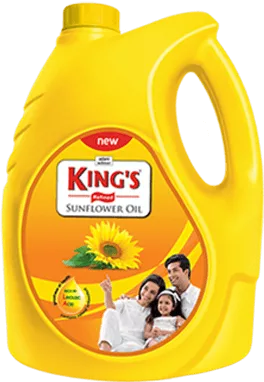
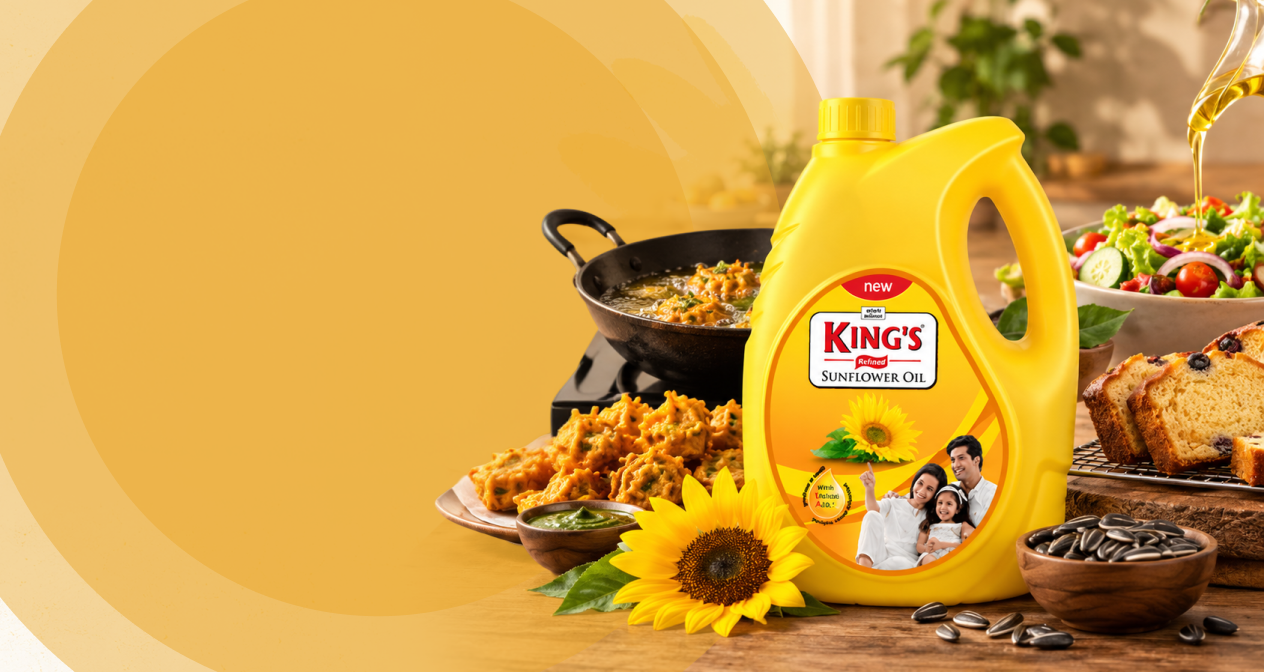
King's Sunflower Oil is refined to suit exactly this kind of everyday cooking, built for frying, sautéing, and general use without needing a second bottle for most daily meals.
Quick Tips for Cooking with Sunflower Oil
- Match the oil type to the cooking method: refined for heat, cold-pressed for dressings.
- Keep a measuring spoon near the oil bottle to avoid overpouring.
- Don't reuse frying oil more than twice.
- Store away from the stove to protect against heat and light exposure.
- Check the label for "high-oleic" if you frequently deep-fry.
Conclusion
Cooking with sunflower oil well comes down to a handful of habits: choosing refined oil for heat, measuring quantities, and storing the bottle properly. None of this requires a culinary degree, just a little attention to how the oil is actually used.
For households that want one dependable, neutral-tasting oil for daily frying, sautéing, and general cooking, King's Sunflower Oil is built to handle that everyday routine without asking for anything extra in return.
Frequently Asked Questions
What's the difference between refined and unrefined sunflower oil for cooking?
Refined sunflower oil is processed to remove impurities, giving it a higher smoke point suited to frying and sautéing. Unrefined or cold-pressed sunflower oil retains more natural flavour and nutrients but has a much lower smoke point, making it better suited to dressings than dishes that need high heat.
Is sunflower oil good for deep frying and high-heat cooking?
Yes, refined sunflower oil generally has a smoke point between 227°C and 232°C, which makes it suitable for deep frying and other high-heat cooking. For repeated frying sessions, high-oleic sunflower oil is often a better choice due to its improved heat stability.
What are the main sunflower oil benefits for everyday health?
Sunflower oil is a source of vitamin E and contains a favourable mix of unsaturated fats. It can be part of a balanced diet when used in moderate, measured quantities alongside a variety of other cooking oils, rather than relying on any single oil exclusively.
Can sunflower oil be used for baking and salad dressings as well as frying?
Yes, refined sunflower oil works well in baking due to its neutral flavour, while cold-pressed or unrefined versions add more character to salad dressings and marinades. Choosing the right type for each task helps you get the most out of the oil's flavour and nutritional value.
How much sunflower oil should a household use daily?
There is no single fixed amount that suits every household, since needs vary by family size and cooking style. As a general practice, measuring oil with a spoon rather than pouring freely helps keep quantities in check and supports more mindful, balanced cooking.
Does sunflower oil go bad, and how can I tell?
Like most cooking oils, sunflower oil can turn rancid over time, especially if exposed to heat, light, or air. Signs include a sharp, unpleasant smell or a change in colour. Storing the bottle tightly sealed in a cool, dark place helps extend its usable life.