
Which Cooking Oil Is Best for Health and Indian Cooking?
Summary
Confused about the best cooking oil? Discover healthy oils for Indian cooking like sunflower, soybean, mustard, and rice bran for heart health.
Cooking oil is an essential ingredient in every Indian kitchen. It adds spices, creates the comforting aroma of home-cooked food, and adds texture to dishes like dal, sabzi, pakoras, and sweets. But did you know the oil you use also affects your nutrition and well-being? The right oil boosts flavour while keeping your meals healthier. King's oils are suitable for everyday Indian cooking, with options designed for frying, sautéing, and tadka. In this guide, we explain why choosing the right cooking oil matters, what to look for (from smoke point to healthy fats), and which oils are best for everyday Indian cooking and heart health. By the end, you will have a clearer idea of which oils, such as sunflower, soybean, mustard, or rice bran, may suit your family’s cooking style and daily needs.
Why Choosing the Right Cooking Oil Matters
Not all cooking oils are the same. Each has its own chemistry and will affect your food and health differently. Some oils have a high smoke point and can handle the intense heat needed for frying, while others break down quickly and taste bitter when overheated. Likewise, oils vary in their fat composition: saturated fats versus mono- and polyunsaturated fats. Swapping "bad" saturated fats for healthier unsaturated fats (like those in vegetable oils) is known to be heart-smart. In short, the oil you choose can make everyday cooking better or worse in both flavour and nutrition.
When you shop for oil, think about how you cook. For high-heat frying (samosas, pakoras, puris), you want an oil that won't smoke too soon. For a gentle stir-fry or making roti dough, a lighter oil is fine. Each oil has a flavour and aroma of its own: some are neutral and let spices shine, others add a kick. By understanding these differences, you'll make tastier meals and eat more healthily. Remember, premium brands like King’s Edible Oils carefully refine their products, ensuring their oils are pure, stable, and free of impurities.
Key Factors to Consider When Choosing Cooking Oil
Before you pick an oil, keep in mind three main factors: smoke point, fat composition, and flavour and aroma. These determine how an oil behaves in the pan and how it affects your health.
Smoke Point
The smoke point is the temperature at which oil starts to burn and smoke. Going past this point not only makes the oil taste bitter but can also form harmful compounds. For example, Indian chefs know not to overheat mustard oil; it smokes around 250°C. Oils with higher smoke points (sunflower, rice bran, peanut) can safely handle deep-frying or fast stir-frying. By contrast, oils with low smoke points (like extra virgin olive oil or unrefined sesame) are better for drizzling or low-heat cooking. Always heat your oil only to the required temperature, and watch for smoking, which signals it's time to turn down the heat or choose a different oil.
Fat Composition
Different oils have different types of fats. Saturated fats (found in ghee, butter, and coconut oil) can raise cholesterol, while unsaturated fats (monounsaturated and polyunsaturated) are better for heart health. Replacing saturated fats with oils rich in unsaturated fats is a heart-smart move. For example, soybean, sunflower, and rice bran oils contain mostly polyunsaturated/monounsaturated fats and very little saturated fat. These "good" fats can help maintain healthy cholesterol levels. Also look for oils with extra nutrients: Their Soybean Oil has added vitamins A and D, and King’s Rice Bran Oil is rich in gamma-oryzanol (an antioxidant linked to lower LDL cholesterol). So, seek oils with a balanced fat profile: high in mono/polyunsaturated fats and low in saturated fat to support heart health.
Flavour and Aroma
Some oils have a neutral taste that lets your spices and ingredients shine, while others add their own character. For example, sunflower and soybean oils are very mild; they won't overwhelm a curry or halwa. King’s Sunflower Oil is praised for its lightness and neutral flavour. Mustard oil, on the other hand, is very pungent; it gives a rustic kick to pickles, curries and the familiar tempering (tadka) of dal. Even the brand matters: The Kachi Ghani Mustard Oil comes from the first cold press of mustard seeds, offering a refreshing aroma and rich flavour. In practice, many cooks keep two oils on hand: a neutral one (like sunflower or rice bran) for most dishes, and a strong flavoured one (like mustard or peanut) for when you want that extra aroma.
Types of Cooking Oils Used in Indian Kitchens
India's diverse cuisine uses many oils, often varying by region and dish. Each oil has unique traits that suit certain recipes. Here's a look at four common choices, and how King's Edible Oils presents them:
-
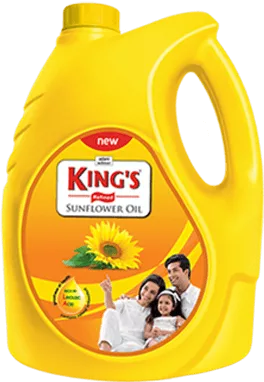
Sunflower Oil: Light Taste and High Smoke Point. King’s Sunflower Oil is very popular for everyday cooking. It's extracted from sunflower seeds and has a very light, mild flavour. Sunflower oil is rich in vitamin E and natural antioxidants. It's also high in polyunsaturated fats (especially linoleic acid) and low in saturated fat, helping maintain healthy cholesterol. Importantly, it has a high smoke point, so it works well for frying snacks, sautéing spices or baking. In fact, their sunflower oil is "ideal for frying, sautéing, baking, and salad dressings" thanks to its mild taste and heat tolerance. You can fry crispy puris or bhajias in it without worrying about off flavours.
-
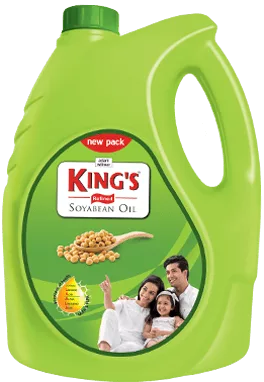
Soybean Oil: Rich in Omega-3 Fats. King’s Soybean Oil is another healthy everyday oil. It's enriched with omega-3 and omega-6 essential fatty acids, which are valuable for heart and brain health. This oil also contains vitamins A and D and has very little saturated fat. The taste is very neutral, so it's great for a variety of Indian dishes from curries to light stir-fries. Their soybean oil is among the best choices for a healthy way of cooking because of these nutrients. It has a high smoke point, making it suitable for frying and baking. You'll often find cooks using soybean oil to make dosa or pakora batter crispy without altering the flavour.
-
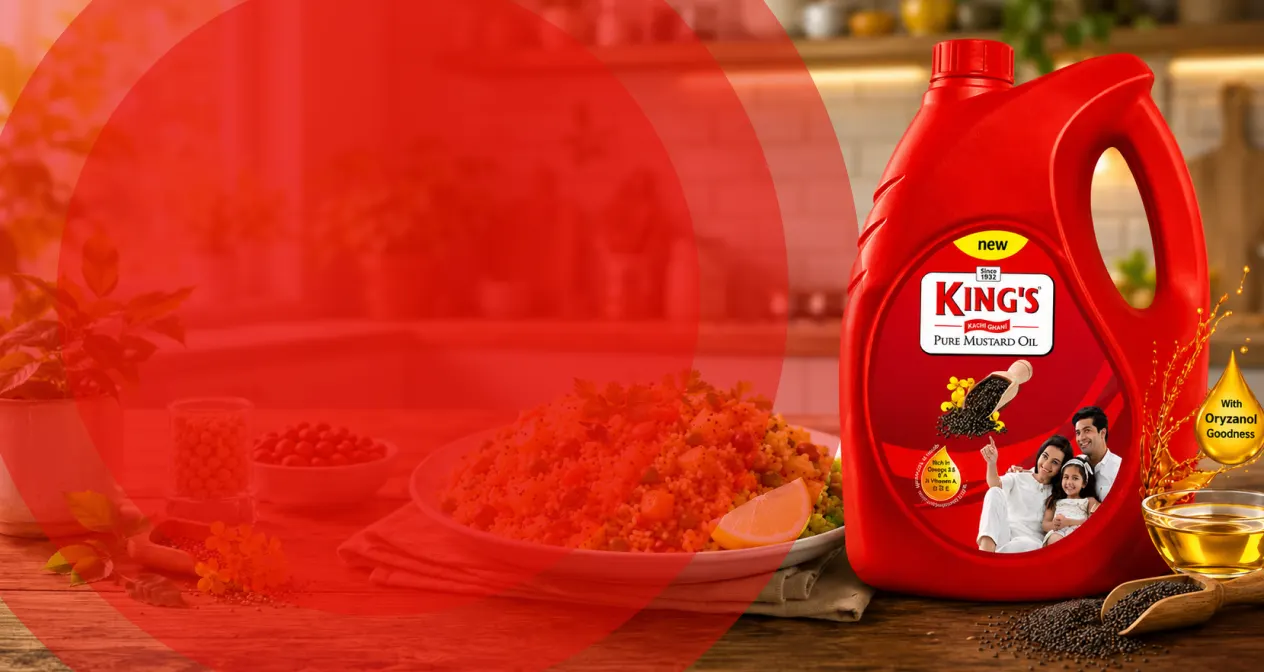
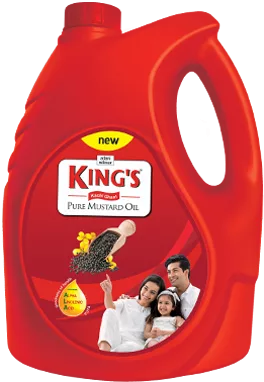
Mustard Oil: Traditional Indian Oil. Mustard oil has been a kitchen staple in many regions (Punjab, Bengal, Odisha) for generations. King’s sells a Kachi Ghani Pure Mustard Oil (cold-pressed from the first press) with a very strong, pungent aroma. This oil instantly adds a mustardy kick and golden colour to dishes. In cooking, mustard oil is traditionally used for pickling vegetables, deep-frying snack foods and tempering spices (like the cumin or mustard seed tadka in dals). It's valued for its warming flavour and digestive properties. Nutritionally, it also has benefits: mustard oil contains omega-3 fatty acids that may help reduce bad cholesterol levels. In short, use mustard oil when you want that authentic bite and aroma in your food, just heat it until it smokes to mitigate the pungency.
-
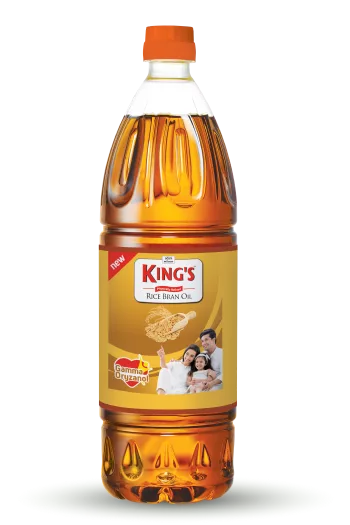
Rice Bran Oil: Heart-Friendly Option. Rice bran oil is gaining popularity as a healthful choice. Made from the outer bran of rice grains, King's Rice Bran Oil is packed with antioxidants and nutrients. It's particularly rich in gamma-oryzanol, a compound known to improve the HDL/LDL cholesterol ratio. This oil has a very high smoke point and a light, almost sweet flavour, so it's good for frying, sautéing and even baking. Because it's refined and "free from Argemone Oil" (a harmful impurity), it's very pure. Their rice bran oil is ideal for everyday cooking with a balanced blend of monounsaturated and polyunsaturated fats. In practice, you might choose this for deep-frying or when you want a neutral oil that supports heart health. Many health experts suggest rice bran oil for its cholesterol-lowering benefits.
Popular Cooking Methods in Indian Cuisine
Indian cooking involves many techniques, and matching the oil to the method improves results and taste. Here are three typical methods:
-
Deep Frying. Deep-fried snacks like samosas, pakoras, kachoris and puris are staples at many gatherings. For these, you need a very heat-stable oil. Oils with high smoke points (above 230°C) are best, because they won't break down or smoke violently at frying temperatures. Sunflower and rice bran oil are great for deep frying: they handle the heat, give a golden crisp finish, and keep the oil less likely to clog with burnt bits. Their Rice Bran Oil is ideal for deep frying due to its high smoke point, maintaining flavour and quality. Mustard oil also has a decent smoke point and adds a sharp flavour to fried foods if that's what you prefer. In any case, make sure the oil is hot enough (but not smoking) before adding food so you get a crisp, non-greasy coating.
-
Stir Frying and Sautéing. Many Indian curries and sabzis begin with a quick sauté or stir-fry of onions, garlic and spices. For this, you don't need the absolute highest smoke point, but you do want oil that heats evenly and spreads heat well in the pan. Lighter oils like soybean or sunflower heat up quickly and coat the pan nicely. King’s Soybean Oil, for instance, is praised for being versatile with a high smoke point, perfect for frying and sautéing. Because they are mild in flavour, these oils let the aromatics (cumin, mustard seeds, curry leaves) shine. When you toss vegetables or chicken quickly over medium-high heat, these oils carry the heat without overpowering the dish.
-
Tadka (Tempering). Tadka is the step where hot oil is poured over spices or tempering is done in the pan at the end of a recipe. This is classic in dals, curries, and even some dals in Bengali cooking. Any good oil will work, but using an oil with a bit of flavour can elevate the taste. For example, mustard oil is beloved in Bengali and Punjabi cuisine for its bold flavour. In tadka, it infuses dishes with its spicy aroma. Even so, many home chefs use sunflower or rice bran oil for tadka so as not to overpower mild dals. Whichever oil you use, make sure it is hot enough to sizzle the spices (chillies, cumin, garlic) quickly; this releases their full flavour into the dish.
Benefits of Using Quality Cooking Oils
Choosing a high-quality cooking oil (like a well-refined King's oil) brings several advantages:
-
Supports Heart Health. Quality oils tend to have healthier fat profiles. When used in moderation, oils rich in monounsaturated and polyunsaturated fats can help support heart health. Replacing saturated fats (butter, ghee) with oils such as Soybean, Sunflower or Rice Bran can keep cholesterol in check. For instance, King's Rice Bran Oil with its gamma-oryzanol and vitamin E has been shown to raise good (HDL) cholesterol and lower bad (LDL) cholesterol. Even mustard oil, which is rich in omega-3s, may help reduce LDL cholesterol. In short, using these oils as part of a balanced diet supports healthy blood lipids and overall heart wellness.
-
Improves Food Taste. The right oil enhances the natural flavours of your ingredients. A high-quality, pure oil will not have off-flavours and instead will let the spices and vegetables taste richer. King’s Edible Oil specifically emphasises purity and authenticity, meaning its oils bring out the "delicacy" of food without any chemical aftertaste. For example, a fresh sunflower oil can coax out the sweetness of carrots or the nuttiness of lentils. A mustard tadka in Dal will smell comforting and bold because the oil is of good quality. Even the American Heart Association notes that oils have distinctive flavours and you should try different kinds to see which suits your taste. In practice, switching from an old, reused oil to a fresh King’s oil will make your sabzi or paratha dough taste cleaner and more vibrant.
-
Versatile for Different Recipes. Premium cooking oils are processed to suit various methods. Many of the options of this range are "refined" to neutralise flavour and raise smoke points. This means you can use one good oil for almost everything. For example, Soyabean Oil is described as versatile and suitable for frying, baking and beyond. Rice Bran Oil can similarly be used in high-heat cooking or even in baking, adding healthy fats without altering flavour. When you buy a high-grade oil (like King’s Refined Oils), it performs reliably: it won't cloud or smell off quickly, and it lets you fry, roast, bake or grill with ease. A single bottle can often handle your bread dough, veg stir-fry and even dessert recipes, making your kitchen simpler and your cooking more consistent.
How to Choose the Best Cooking Oil for Your Kitchen
So, how do you pick your best oil? First, match the oil to your usual cooking style. If your family loves fried snacks or tandoori-style cooking, make sure to have a high-smoke-point oil (such as King’s Sunflower or Rice Bran Oil) in the pantry. If you mostly cook curries and sautéed dishes, a versatile oil like their Soybean will do nicely.
Next, read the label and know the fat content. Aim for oils low in saturated fat and high in unsaturated fats. Check for any added vitamins or claims (Soybean Oil mentions Vitamins A & D, for example). Also, look at how the oil is made: cold-pressed or refined. Cold-pressed oils (like King’s Kachi Ghani Mustard Oil) retain more nutrients and aroma, but refined oils (like their refined Rice Bran and Sunflower) have higher smoke points and longer shelf life.
Finally, pick a trusted brand. Choosing a brand that focuses on purity and proper processing will give you better taste and consistency. For instance, King's edible oils emphasise 100% pure, argemone-free products. This means you get genuine oil without hidden additives. In practice, you might keep two bottles: a reliable refined oil for everyday cooking (like the Rice Bran Oil) and a special one for certain recipes (like the Mustard Oil for pickles). By considering smoke point, fat profile and brand quality together, you'll end up with oils that make cooking safer, tastier and healthier.
Tips for Using Cooking Oil in a Healthier Way
Finally, small habits in the kitchen can make your oil usage even healthier. For example:
-
Don't overheat the oil. Once an oil reaches its smoke point, it begins to break down and release harmful toxins. Experts warn us to "avoid heating oil beyond its smoke point," as overheated oil accelerates degradation and can produce compounds linked to inflammation and heart disease. In practice, keep your frying temperature steady (around 175–190°C for deep-frying) and never let oil billow into smoke.
-
Limit the reuse of oil. Repeatedly heating the same oil can degrade it. Each time you reuse frying oil, it loses beneficial fats and forms more oxidised compounds. Registered dietitians suggest not reusing cooking oil more than 2–3 times. Ideally, discard strained oil after a couple of uses and use fresh oil. If budget is a concern, "top up" used oil with a little fresh oil to maintain quality, but don't let it go beyond a few cycles.
-
Store it right. Oxygen, light and heat are oil's enemies. Always keep your oil bottle tightly sealed and store it in a cool, dark cabinet. The American Heart Association advises storing oils out of sunlight and away from stoves. This prevents the oil from going rancid. If you have dark-coloured bottles, use those; otherwise, tuck the bottle behind something.
-
Rotate your oils. Using a variety of oils ensures a balance of nutrients. Try to alternate between a few good choices: for example, use the Sunflower Oil one day, Rice Bran Oil the next week, and include a month with some Mustard Oil (for its special benefits). This way, you get different vitamins and antioxidants over time.
By following these tips, you'll get maximum benefit from whatever cooking oil you use. Each measure, from not overheating to proper storage, helps keep the oil pure and healthy for your family.
FAQs
-
Which cooking oil is healthiest for daily use?
Choose oils high in mono and polyunsaturated fats, like soybean, sunflower or rice bran. Rotate oils and minimise saturated fat intake. -
Is sunflower oil better than soybean oil?
Both are healthy: sunflower is milder and rich in vitamin E; soybean offers more omega-3s and added vitamins. Use both as needed. -
Is mustard oil good for frying?
Yes. Mustard oil withstands high heat and adds bold flavour; use cold-pressed for authenticity and moderate amounts to support cardiovascular health. -
Which oil is best for heart health?
Prefer oils high in mono and polyunsaturated fats; rice bran, soybean,sunflower or olive. Limit ghee and coconut oil; use moderately.
Frequently Asked Questions
Choose oils high in mono and polyunsaturated fats, like soybean, sunflower or rice bran. Rotate oils and minimise saturated fat intake.
Both are healthy: sunflower is milder and rich in vitamin E; soybean offers more omega-3s and added vitamins. Use both as needed.
Yes. Mustard oil withstands high heat and adds bold flavour; use cold-pressed for authenticity and moderate amounts to support cardiovascular health.
Prefer oils high in mono and polyunsaturated fats; rice bran, soybean, sunflower or olive. Limit ghee and coconut oil; use moderately.


